
10 Best Large Shipping Boxes for International Shipping?
International shipping can turn a simple carton into a serious engineering decision. Long routes expose packages to drops, compression, vibration, humidity, and rough handling. Choosing the right large shipping boxes requires more than selecting the biggest available size.
As packaging specialist Kevin Howard explains, “A strong shipping box protects the product, but a correctly sized box protects the entire shipping process.” That principle guides this review of the 10 best large shipping boxes for international shipping. We compare material strength, box dimensions, closure systems, moisture resistance, cushioning space, and practical handling.
Corrugated double-wall boxes often provide a useful balance between protection and weight. Triple-wall designs may suit heavier equipment, but they can increase freight costs. Oversized cartons create another problem. Empty space allows movement, while excessive filler adds weight and waste.
Small details matter.
A reinforced bottom can prevent a painful failure. Clear labeling areas can improve warehouse handling. Foldable designs may save storage space before use. Some boxes also accept strapping, corner protection, or custom inserts.
The strongest option is not always the best option. A lightweight carton may work beautifully for durable household goods, yet fail around fragile electronics. Even experienced shippers can overlook humidity exposure or stacking pressure. That deserves honest attention.
This guide focuses on dependable large shipping boxes for legitimate international shipments. It avoids unrealistic promises and highlights where each option performs best. Before buying, measure the product, estimate its packed weight, and test the box under conditions resembling its actual journey.
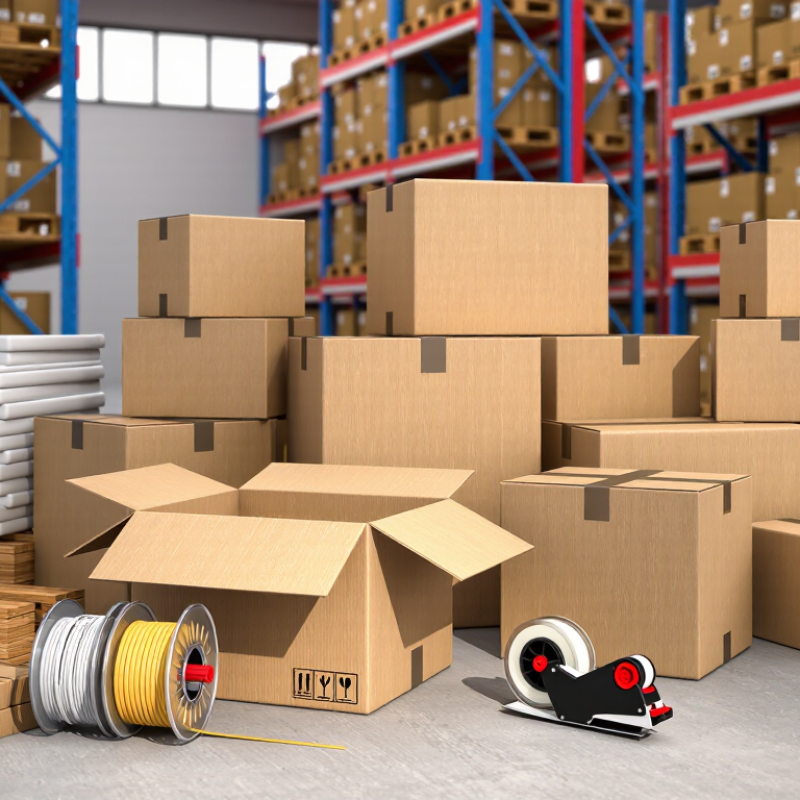
Understanding Large Shipping Box Requirements for International Transport
Choosing a large shipping box for international transport requires more than measuring the product. The outer dimensions affect volumetric weight, handling fees, and available aircraft or vehicle space. Measure length, width, and height after adding protective material. Leave only enough clearance for cushioning. A box that is too large can invite movement and crushing. For example, a 60 × 40 × 40 centimeter carton may need internal supports for a 15-kilogram item.
Strength matters across several transfers. Double-wall corrugated board is often safer for heavy contents, but board grade must match actual weight and stacking pressure. Check edge-crush and burst ratings when the supplier provides them. Keep seams aligned, and seal every opening with moisture-resistant packing tape. International routes may expose cartons to humidity, cold storage, vibration, and rough conveyor handling. Use a waterproof inner wrap when suitable. Avoid handles cut directly into the box. They can weaken side panels.
Labels must remain readable after abrasion. Place the delivery address, contact details, package count, gross weight, and orientation marks on several sides. Record the actual packed weight, not an estimate. Documentation should describe the contents accurately and match the shipment details. Confirm current carrier limits and destination requirements before dispatch. I would test a sample carton before ordering ten box sizes. Drop tests can reveal weak corners. Stack tests can expose a quiet failure: panel collapse after hours. My assumption that thicker cardboard always solved damage proved incomplete; poor internal spacing caused the real problem.
10 Best Large Shipping Boxes for International Shipping? - Understanding Large Shipping Box Requirements for International Transport
| No. | Recommended Box Type | External Dimensions (inches) |
Approx. Dimensions (cm) |
Approx. Volume (L) |
Suggested Construction | Practical Contents Load | Best International Use | Important Requirement |
|---|---|---|---|---|---|---|---|---|
| 1 | Large General-Purpose Box | 24 × 18 × 18 | 61 × 46 × 46 | 127 | Double-wall corrugated | Up to 18 kg / 40 lb | Clothing, household goods, books, and mixed non-fragile items | Use void fill to prevent shifting and protect corners from compression. |
| 2 | Medium-Volume Export Box | 24 × 20 × 20 | 61 × 51 × 51 | 157 | Double-wall corrugated | Up to 20 kg / 44 lb | Textiles, packaged consumer goods, and consolidated personal effects | Keep heavy items at the bottom and maintain cushioning on all sides. |
| 3 | Wide Equipment Box | 30 × 20 × 20 | 76 × 51 × 51 | 197 | Double-wall corrugated | Up to 23 kg / 50 lb | Small equipment, appliances, tools, and flat-pack components | Add internal partitions or foam where items can contact one another. |
| 4 | Heavy-Duty Cargo Box | 30 × 24 × 24 | 76 × 61 × 61 | 283 | Heavy-duty double-wall | Up to 27 kg / 60 lb | Dense but moderately sized products and commercial samples | Use reinforced tape and a strong bottom seam; do not exceed the box test rating. |
| 5 | Long Cushioning Box | 36 × 24 × 24 | 91 × 61 × 61 | 340 | Double-wall with corner protection | Up to 23 kg / 50 lb | Long household items, sports equipment, and disassembled furniture parts | Measure the packed length carefully because oversized surcharges may apply. |
| 6 | Extra-Wide Household Box | 40 × 24 × 24 | 102 × 61 × 61 | 378 | Heavy-duty double-wall | Up to 25 kg / 55 lb | Bulky but lightweight items such as bedding, garments, and cushions | Avoid excessive empty space because dimensional weight can exceed actual weight. |
| 7 | Large Mixed-Goods Box | 36 × 30 × 24 | 91 × 76 × 61 | 425 | Heavy-duty double-wall | Up to 27 kg / 60 lb | Relocation goods, retail inventory, and multiple individually packed products | Use a moisture-resistant inner wrap for goods exposed to humidity during transit. |
| 8 | Extra-Long Shipping Box | 40 × 30 × 30 | 102 × 76 × 76 | 590 | Heavy-duty double-wall | Up to 30 kg / 66 lb | Large household articles and low-density commercial shipments | Check the combined length-and-girth limit before selecting parcel transport. |
| 9 | Large Flat-Item Box | 48 × 24 × 24 | 122 × 61 × 61 | 453 | Double-wall with rigid inserts | Up to 23 kg / 50 lb | Panels, framed items, signage, and disassembled flat products | Protect both broad faces with rigid boards and leave clearance from the walls. |
| 10 | Maximum-Volume Consolidation Box | 48 × 36 × 30 | 122 × 91 × 76 | 849 | Triple-wall or reinforced double-wall | Up to 35 kg / 77 lb | Freight-forwarded household goods and large consolidated shipments | Freight service may be more suitable than parcel service; verify pallet, handling, and customs rules. |
Related Posts
-
Top 10 Large Shipping Boxes for Your Moving and Packaging Needs
-

Top 10 Uses for Large Boxes You Need to Know About
-

2026 Top Shipping Boxes Trends for Your Business Needs?
-

What are the Different Shipping Box Sizes for Your Needs?
-

How to Choose the Right Shipping Boxes for Your Business?
-
China Best Large Shipping Boxes for Your Logistics Needs?