Why Are Cardboard Shipping Boxes Essential for Sustainable Packaging?
As the world grapples with increasing environmental concerns, packaging choices have become crucial. Cardboard shipping boxes have emerged as a preferred option for many businesses and consumers. These boxes are not only lightweight but also made from renewable resources. They offer a sustainable solution that reduces the carbon footprint of shipping.
In the bustling e-commerce landscape, packaging plays a vital role. Cardboard shipping boxes provide ample protection for products while being easy to recycle. They are versatile and can be customized for various sizes and shapes, addressing different shipping needs. However, not all cardboard is created equal. Some options may lack durability, leading to potential product damage during transit.
It's essential to reflect on the impact of our choices. The shift to cardboard shipping boxes may not be perfect yet. While they represent a step toward sustainability, challenges remain. For instance, ensuring a full life cycle analysis of materials can be complicated. Recognizing these imperfections can lead to better practices and innovation in packaging.

The Environmental Benefits of Cardboard Shipping Boxes
Cardboard shipping boxes have become a staple in sustainable packaging. They are made from renewable resources, predominantly from trees. According to the Paper and Packaging Board, about 70% of the material used in cardboard boxes is recycled content. This reduces the demand for virgin materials and lessens deforestation. However, the recycling rate for cardboard is not perfect. Approximately 45% of cardboard produced still ends up in landfills, contributing to waste.
The production of cardboard is also more energy-efficient. Data from the Environmental Protection Agency indicates that manufacturing one ton of cardboard uses about 24% less energy than it does to produce plastic. Yet, challenges remain. Not all recycling facilities accept cardboard in the same way, leading to confusion for consumers. Furthermore, the transportation of cardboard can generate emissions, especially if sourced from far-off locations.
In terms of impact, using cardboard over plastic significantly cuts down on pollution. The World Economic Forum estimates that careful packaging choices can reduce carbon footprints by as much as 30%. However, companies must remain vigilant. Overproduction and poor design can negate these environmental benefits. The goal is to create a balance that minimizes waste while maximizing functionality and sustainability in shipping.
Cardboard vs. Plastic: A Comparative Analysis of Sustainability
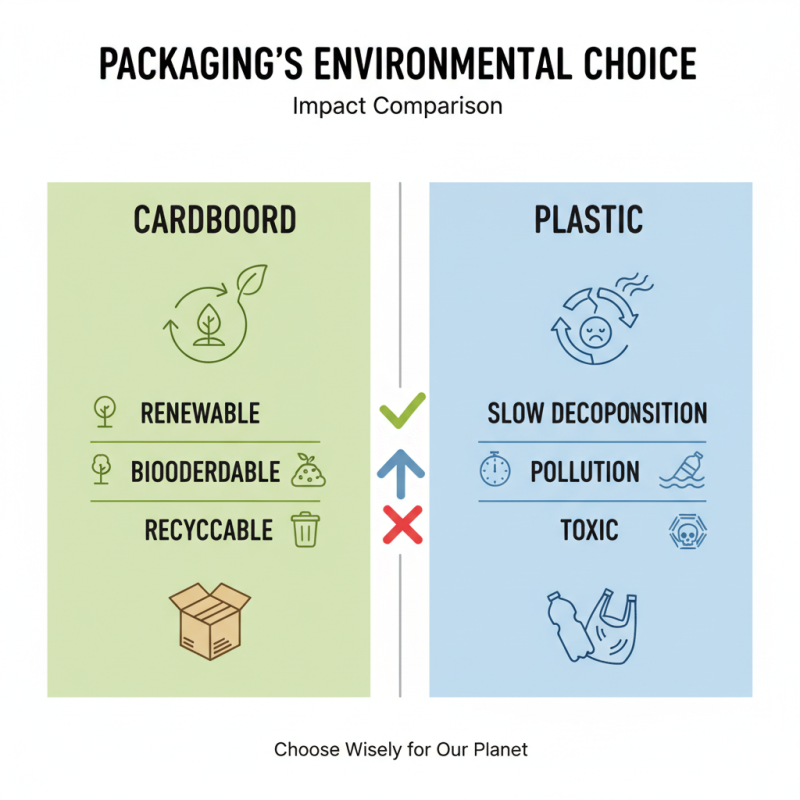
When comparing cardboard and plastic packaging, the environmental impact is a significant concern. Cardboard is made from renewable resources. It is biodegradable and recyclable, which makes it an appealing choice for eco-conscious consumers. In contrast, plastic takes hundreds of years to decompose. It also contributes to increasing pollution, as it often ends up in oceans and landfills. The breakdown of plastic releases harmful toxins into the environment.
However, cardboard has its drawbacks too. Production processes can still involve harmful chemicals. These chemicals can affect air and water quality. Sometimes, the source of the cardboard is not sustainable. Not all cardboard is recycled properly. This raises questions about true sustainability. The journey toward better packaging is complex and requires ongoing evaluation.
In a world where waste reduction is crucial, every choice matters. Choosing cardboard over plastic may seem straightforward, yet it requires deeper reflection. Companies must examine their entire supply chain. Balancing functionality and sustainability is no easy task. As we rethink our packaging solutions, we must remain vigilant and informed.
Recyclability and Reusability of Cardboard Packaging Solutions
Recyclability is a crucial feature of cardboard packaging. Studies show that around 89% of cardboard is recycled in the U.S. This high recycling rate significantly reduces landfill waste. It also conserves natural resources, such as trees and water. Cardboard can be recycled several times before it becomes unusable, promoting a circular economy.
Reusability is another benefit of cardboard boxes. They are sturdy and can be repurposed for various uses. Many consumers choose to reuse cardboard boxes for storage or moving. This practice extends the life cycle of the material and reduces the demand for new packaging. However, some companies still opt for single-use packaging, which contradicts sustainability goals.
Despite the benefits, not all cardboard is created equal. Some boxes may be treated with chemicals, making recycling more challenging. There’s a need for clear labeling and education about which types of cardboard can be recycled. Addressing this can improve overall recycling rates and enhance sustainable practices in packaging.
Cost-Effectiveness and Efficiency of Cardboard Shipping Boxes
Cardboard shipping boxes have become a cornerstone of sustainable packaging due to their cost-effectiveness and efficiency. According to recent industry reports, around 70% of e-commerce companies now prefer cardboard for shipping. This preference stems from its lightweight nature, which significantly reduces shipping costs. A study from the Paper and Packaging Board noted that shipping with cardboard can lower transportation fees by nearly 20%.
In addition to cost savings, cardboard boxes excel in efficiency. They are easy to assemble and can be customized for various products. Over 40% of companies noted improved delivery times when using cardboard boxes compared to other materials. However, some believe that cardboard can’t always protect fragile items. These concerns highlight the need for further innovation in design. Balancing protection and sustainability remains a challenge.
Despite these imperfections, the recyclability of cardboard is a significant advantage. The Fibre Box Association estimates that 85% of cardboard is recycled in the U.S. This statistic shows the potential of cardboard to minimize waste. As more companies navigate their environmental impact, understanding the effectiveness of cardboard will be crucial.
Innovations in Cardboard Design for Eco-Friendly Shipping Practices
Cardboard shipping boxes play a crucial role in sustainable packaging. Recent innovations in cardboard design enhance their eco-friendly attributes. For instance, some manufacturers are using recycled materials to create sturdy boxes. This minimizes waste and reduces the need for virgin resources. Unique designs also allow for better stacking and shipment efficiency. These advancements contribute to lower carbon footprints.
Tips: You can choose boxes with natural adhesives. This may help cut down on harmful chemicals. Also, consider the size of the box. A more fitting size reduces excess space and material usage.
Additionally, many companies are testing biodegradable coatings on cardboard. These coatings protect contents during transit while remaining environmentally friendly. Yet, it’s vital to question the longevity of these materials. Will they genuinely decompose as promised? This is a point for consumers to reflect on.
The shift towards eco-conscious packaging is commendable. However, businesses must prioritize transparency about their methods. Customers should feel confident in their choices. Each step towards improved cardboard design can set a new standard in sustainable shipping practices.