
Choosing a reliable Debris Bag manufacturer in China requires more than comparing prices or browsing polished product pages. Global buyers need practical evidence: material specifications, stitching quality, load capacity, packaging details, and consistent export experience. This guide introduces ten manufacturers serving construction, renovation, landscaping, and industrial cleanup markets.
The selected companies are considered through a buyer-focused lens. Their product ranges may include woven polypropylene bags, heavy-duty rubble sacks, reusable bulk bags, and customized waste containers. Attention is given to fabric density, seam reinforcement, handle design, UV resistance, closure options, and printing accuracy. Small details matter. A weak corner seam can fail during lifting. A poorly sealed bag can spread dust across a worksite.
Supplier verification remains essential. Buyers should request current samples, factory photographs, test documentation, production videos, and clear quality-control procedures. Certifications can support credibility, but they should be checked against the actual product and manufacturing site. Communication also reveals expertise. Can the supplier explain weight tolerance, minimum order quantities, loading methods, and moisture protection without vague promises?
No ranking is flawless. Manufacturing capacity, lead times, and service quality can change. Some companies may perform well for large orders but struggle with smaller customized batches. Others may offer attractive prices while requiring closer inspection. This guide is therefore a practical starting point, not a final purchasing decision. Buyers should compare evidence carefully, test samples under realistic conditions, and confirm every specification in writing before production. A dependable partnership is built through repeated verification, not one impressive quotation.
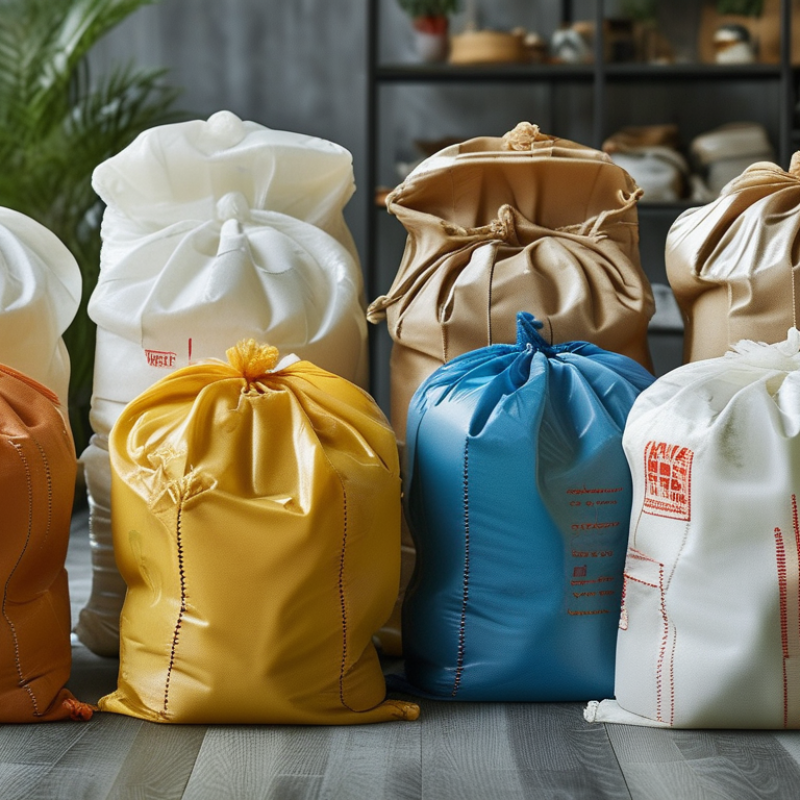
Debris bags are not ordinary trash sacks. On renovation sites, they carry broken brick, plaster, timber splinters, and damp insulation. Heavy rubble needs woven polypropylene or reinforced polyethylene. These materials resist tearing better than thin household film. For lighter waste, low-density polyethylene can reduce cost and improve flexibility. Recycled content may support sustainability goals, but inconsistent material quality can reduce puncture resistance. That trade-off deserves careful review.
A reliable specification should state tensile strength, tear resistance, puncture resistance, seam strength, and safe working load. Request test reports with clear methods, test dates, and sample details. General claims such as industrial grade prove very little. For large flexible intermediate bulk containers, ISO 21898 may be relevant. Other bags may require different ASTM or ISO methods. Do not treat one standard as universal. Water resistance is also not waterproofing. Small wording differences matter.
Field inspections often reveal weak seams before fabric failure. Ask suppliers to test filled bags, not only flat samples. Include sharp-edged debris, uneven loading, and short lifting cycles. UV exposure matters when bags remain outdoors, especially in bright, hot regions. A perfect debris bag is unrealistic. Even strong fabric can fail after poor stitching or overloading. When comparing Chinese factories, buyers should review production controls, batch consistency, packaging, and traceable inspection records. One overlooked detail: handle design. Handles must distribute weight without cutting into the fabric. A cheaper bag may pass a simple load test yet fail during repeated handling. Test the real use case.
Evaluating debris bag manufacturers for global procurement requires more than comparing quoted prices. Examine their experience with construction, renovation, landscaping, and municipal waste applications. Ask how long they have produced heavy-duty bags and which materials they use. Recycled content, virgin resin, woven fabric, and laminated layers perform differently under weight and moisture. Request samples with identical dimensions, thickness, closure style, and load ratings.
Test the bags in realistic conditions. Fill them with broken wood, plaster, soil, or packaging waste. Check seam strength, puncture resistance, handle durability, and leakage after storage. A reliable manufacturer should provide test records, batch controls, and clear tolerances. Factory audits also matter. Review production lines, raw material storage, worker training, and inspection points. Photos are useful, but live verification is stronger.
Do not ignore communication. Slow answers can become costly during seasonal demand or port delays. Confirm minimum order quantities, sample charges, packaging details, lead times, and replacement procedures in writing. Check whether the manufacturer can support your destination’s labeling and product documentation requirements. A low unit price may hide weak packaging or unstable quality. No supplier is flawless. I would record both strengths and gaps, then score them against actual project risks. That extra reflection often prevents an attractive quotation from becoming an expensive mistake.
China’s top ten debris bag manufacturers serve construction, renovation, landscaping, and municipal cleanup projects worldwide. Their strongest products usually combine tear-resistant polypropylene fabric with reinforced lifting loops. Some factories also produce laminated woven bags for damp rubble, while others focus on breathable bags for lighter waste. Product strength depends on fabric density, stitching quality, seam design, and tested load capacity.
Several manufacturers stand out through specialized production. One group offers heavy-duty bags with cross-corner loops and double-stitched seams for bricks and concrete fragments. Another focuses on compact garden-waste bags with wide openings and stable bases. Some facilities provide custom dimensions, warning labels, color coding, and flat-pack delivery. Recycled material can reduce cost and environmental impact, but buyers should confirm its actual percentage and tensile performance. Specifications need evidence.
Reliable suppliers usually maintain incoming-material checks, sewing-line inspections, and final load testing. Export experience also matters. Clear packing lists, inspection records, and consistent batch samples reduce purchasing risks. Factory audits should examine fabric storage, needle control, worker training, and moisture protection. A low price may hide thinner fabric or weak handles. No factory is perfect. Even strong manufacturers may show uneven stitching in a rushed production batch. Buyers should request pre-production samples, define acceptable defects, and test bags under realistic debris weights before placing large orders. Different projects need different strengths. A demolition site should not use the same bag design as a garden cleanup.
China’s top 10 debris bag manufacturers differ sharply in production capacity. Some operate automated cutting and sewing lines, while others rely on smaller workshop teams. Monthly output matters, but delivery consistency matters more. A factory producing 500,000 bags may still miss deadlines during peak construction seasons. Ask for machine counts, staffing levels, and recent production records.
Customization begins with material selection. Woven polypropylene, laminated fabric, and recycled blends offer different strength and moisture resistance. Request samples with your exact dimensions, handle design, printing, and stitching pattern. Check whether the supplier can maintain color accuracy across repeat orders. Small details matter. A weak handle can fail under broken concrete, timber, or wet soil.
Quality control should include seam testing, load testing, and random inspections before shipment. Experienced buyers often request inspection photos, batch numbers, and a written tolerance range. Pricing needs a wider view. A low unit price may exclude custom plates, packaging, inspection, or inland transport. Compare complete landed costs instead of quoted bag prices. Some manufacturers provide clearer documentation than others, and that difference can reduce purchasing risk. Even careful evaluations have gaps. Sample performance may not fully represent a long production run, so periodic third-party checks remain sensible.
International buyers comparing the top ten debris bag manufacturers should verify more than price and production capacity. Request material specifications, tensile-strength data, seam testing, and recent quality records. Polyethylene grades, thickness, and bag dimensions should match the intended construction or cleanup work. A clear technical file builds trust.
Compliance begins with the destination market. Confirm labeling, chemical declarations, recycled-content claims, and packaging rules before placing a purchase order. Ask whether test reports apply to the exact bag structure, not a similar sample. If compostability or recycled content is advertised, demand supporting certification. Details matter. Requirements can differ between countries, ports, and end users.
Packaging must protect bags from moisture, dust, compression, and ultraviolet exposure during long transit. Export cartons should show quantity, dimensions, gross weight, batch number, and handling instructions. Request photographs before loading. A simple carton count can prevent a costly receiving dispute. Shipping terms, pallet treatment, container loading, and customs documents also need written confirmation. Check the commercial invoice, packing list, certificate of origin, and product classification carefully. One overlooked document may delay clearance. A supplier can appear reliable yet provide weak traceability. That risk deserves attention. Regular pre-shipment inspections improve consistency, although they cannot replace careful supplier evaluation.
| Rank | Typical Manufacturer Profile | Primary Bag Material | Construction & Thickness | Typical Size Range | Working Capacity | Closure & Handle Options | Recommended Compliance Checks | Typical Packaging | Indicative Shipping Parameters | Best-Fit Purchasing Application |
|---|---|---|---|---|---|---|---|---|---|---|
| 1 | Heavy-Duty Woven Sack Profile ★★★★★ High-load construction waste | Coated woven polypropylene (PP), with optional laminated inner layer | Woven fabric commonly 90–140 g/m²; optional PE coating for moisture resistance | 600 × 900 mm to 800 × 1,100 mm | 50–100 L; suitable for dense rubble when lifting limits are observed | Open mouth, drawstring, sewn top hem, or four reinforced lifting handles | REACH material declarationHeavy-metal testTensile and seam test | Compressed bales of 25–100 pieces; woven PP outer bale or corrugated carton | Approx. 0.08–0.18 m³ per bale; final 20 ft/40 ft loading depends on bale compression and weight limits | Brick fragments, plaster, tiles, timber, and mixed renovation debris |
| 2 | Extra-Thick PE Rubble Bag Profile ★★★★★ Sharp and abrasive waste | Low-density polyethylene (LDPE) or linear low-density polyethylene (LLDPE) | Film thickness commonly 100–200 microns; star-sealed or flat-bottom construction | 550 × 900 mm to 700 × 1,000 mm | 60–120 L; capacity depends on film gauge and waste density | Open-top, tie-top, drawstring, or integrated carry handles | Film thickness toleranceDart-impact testSeal-strength testREACH declaration | Rolls, loose folded bags, or bales of 10–50 pieces | Approx. 0.05–0.14 m³ per bale; lightweight cargo may be limited by container volume rather than payload | Dusty renovation waste, insulation offcuts, plasterboard pieces, and general site clearance |
| 3 | Multi-Layer Co-Extruded Film Profile ★★★★★ Balanced puncture resistance | Co-extruded PE film, commonly using a tougher LLDPE layer with LDPE processing layers | 100–180 microns; multi-layer structure supports improved puncture and tear resistance | 600 × 900 mm to 800 × 1,200 mm | 70–150 L | Star seal, double seal, drawstring, or reinforced top edge | Layer structure confirmationPuncture resistanceTear propagationFood-contact claim excluded unless certified | Flat-packed in cartons or compressed in polyethylene bales; commonly 20–50 pieces per pack | Approx. 0.07–0.16 m³ per bale; suitable for mixed pallet and floor-loaded shipments | Importers seeking a strong general-purpose bag with lower material weight than woven sacks |
| 4 | Reusable Laminated PP Bag Profile ★★★★☆ Repeated handling and reuse | Woven PP with laminated PP or PE surface | Approximately 100–160 g/m² woven base; reinforced stitching at seams and handles | 500 × 800 mm to 700 × 1,000 mm | 50–100 L; reusable when inspected after each use | Two short handles, four lift handles, hook-and-loop top, or drawstring closure | Handle load testSeam-strength testAbrasion testREACH declaration | Stacked and strapped in cartons or woven PP bales; protective corner boards recommended | Approx. 0.10–0.22 m³ per bale; palletization improves warehouse handling but increases freight volume | Professional contractors, property maintenance, and controlled indoor demolition work |
| 5 | Flat-Bottom Contractor Sack Profile ★★★★☆ Stable placement on job sites | Heavy-gauge LDPE/LLDPE film or woven PP with a reinforced base | 120–180 microns for film versions; reinforced bottom seam for woven versions | 600 × 900 × 250 mm to 800 × 1,100 × 300 mm | 70–140 L | Flat base, open mouth, tie handles, or four-corner lifting loops | Bottom seam testStatic load testDimensional tolerancePrint-ink migration review | Nested bundles of 10–25 pieces inside cartons or compression bales | Approx. 0.12–0.25 m³ per bale; dimensional shape can reduce container utilization | Sites where bags must remain upright near walls, workstations, or collection points |
| 6 | Drawstring Cleanup Bag Profile ★★★★☆ Fast closing and collection | Recycled-content PE or virgin LDPE/LLDPE, subject to buyer specification | 80–150 microns; reinforced drawstring channel and top hem | 550 × 750 mm to 700 × 1,000 mm | 45–100 L | Integrated PE drawstring, dual drawstrings, or external tie handles | Recycled-content verificationDrawstring pull testSeal-strength testREACH declaration | Rolls or folded packs of 10–50 bags; carton labeling should show quantity and dimensions | Approx. 0.04–0.12 m³ per carton or bale; efficient for mixed-container orders | Interior strip-out, light construction waste, packaging waste, and daily site cleanup |
| 7 | Recycled PP Woven Bag Profile ★★★★☆ Cost and sustainability balance | Post-industrial or post-consumer recycled PP, with virgin PP reinforcement if required | 90–140 g/m²; actual strength varies with recycled resin ratio and tape quality | 600 × 900 mm to 750 × 1,050 mm | 50–90 L | Open top, sewn hem, drawcord, or webbing handles | Recycled-content certificateBatch traceabilityTensile testSubstance restrictions | Compressed bales of 25–100 pieces with batch labels and moisture protection | Approx. 0.08–0.18 m³ per bale; confirm odor, color variation, and recycled-resin consistency before bulk order | Projects with recycled-content targets and moderate debris loads |
| 8 | Printed Sorting Sack Profile ★★★★☆ Waste-stream identification | PE film or coated woven PP with one- or multi-color flexographic printing | 90–180 microns for film; 90–130 g/m² for woven versions | 500 × 700 mm to 700 × 1,000 mm | 40–100 L | Open top, tie-top, drawstring, or color-coded handles | Ink adhesion testPrint artwork approvalChemical complianceBarcode readability | Cartons or bales with artwork, color, lot number, and quantity identification | Approx. 0.06–0.16 m³ per bale; printed cartons require additional moisture protection for ocean freight | Separate collection of wood, metal, plastic, plasterboard, or general waste |
| 9 | Weather-Resistant Outdoor Bag Profile ★★★★☆ Outdoor storage and transport | UV-stabilized woven PP or UV-resistant co-extruded PE | 100–160 g/m² woven fabric or 120–200 microns film; optional water-resistant coating | 600 × 900 mm to 800 × 1,100 mm | 60–120 L | Reinforced handles, drawstring, tie flap, or fold-over closure | UV exposure testWater-resistance testHandle load testDimensional inspection | Moisture-protected bales or cartons on fumigated/heat-treated pallets when required by destination | Approx. 0.10–0.22 m³ per bale; use desiccants and container moisture controls for long ocean routes | Outdoor demolition, landscaping debris, temporary storage, and rainy-season projects |
| 10 | Custom-Size Export Sack Profile ★★★★☆ Private specification and project orders | Buyer-selected PE, woven PP, or multi-layer construction | Commonly 80–200 microns for film or 90–160 g/m² for woven PP | Custom dimensions; common export range is 500–800 mm wide and 700–1,200 mm long | 40–150 L, subject to design and safe working load | Custom closure, handle geometry, gusset, bottom seal, or lifting loop design | Pre-production sampleGolden sample approvalAQL inspectionPacking-list verification | Buyer-defined carton, bale, or pallet configuration; outer labels should include SKU, lot, quantity, net weight, and gross weight | Freight estimate requires confirmed folded size, carton dimensions, pallet plan, and gross weight; compare FOB, CIF, and DDP quotations carefully | Retail programs, municipal tenders, large construction groups, and multi-country distribution |