How to Choose Large Shipping Boxes for Your Business Needs?
Choosing the right large shipping boxes is crucial for any business. With the retail e-commerce market projected to reach $6.54 trillion by 2023, the demand for adequate packaging solutions is growing. Large shipping boxes ensure safe delivery and enhance customer satisfaction. As packaging expert Jenna Thompson states, "The right box can make or break the unboxing experience for your customers."
Understanding the specific needs of your products is key. For instance, fragile items require sturdy, larger boxes to prevent damage. The material of these boxes also matters—multilayer cardboard offers durability. According to the Packaging Industry Association, poor packaging causes up to 30% of shipping damages. A careful selection of large shipping boxes can minimize these risks and improve your bottom line.
However, not all companies consider these factors. Some may choose cost over quality, leading to higher returns. It's important to reflect on how your packaging decisions impact your business. By investing time and resources into understanding large shipping boxes, you can strengthen your brand reputation and operational efficiency.
Understanding Your Shipping Requirements and Business Needs
Choosing the right large shipping boxes is critical for any business. Understand your shipping requirements before making a decision. Factors like weight, dimensions, and fragility are vital. Research shows that 30% of shipping costs stem from suboptimal packaging choices. Get those boxes wrong, and it could impact your bottom line.
When determining your needs, consider the products you ship. Fragile items need more protection. According to industry data, nearly 25% of damaged goods result from insufficient packing. It’s crucial to select boxes that fit your products snugly. Larger boxes often lead to higher shipping costs. Monitor how weight affects your expenses as well.
**Tip:** Always measure your items before selecting boxes. This can save on both costs and potential returns.
After assessing your requirements, remember that customer experience is essential. A well-packaged item reflects professionalism. Poor packing can lead to unhappy customers. In fact, 60% of consumers report dissatisfaction due to improper packaging. Be mindful of how your shipping choices impact your brand image.
**Tip:** Invest in quality boxes for valuable shipments. This can enhance your reputation in the long run.
Annual Shipping Volume by Box Size
Evaluating Different Types of Shipping Boxes and Their Features
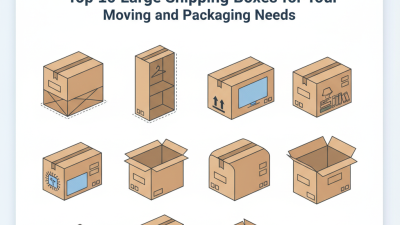
When selecting large shipping boxes, consider various types and their features. Corrugated boxes remain the most common choice. They provide strength and durability, making them ideal for fragile items. In fact, a recent industry report indicated that 75% of businesses prefer corrugated packaging for its protective qualities.
Another option is rigid boxes, known for their sturdiness. These boxes often come with lids and are suitable for high-end products. However, they can be more expensive, which is a key consideration for many businesses. A study found that about 30% of companies choose rigid boxes for luxury items, but budget constraints can limit this choice.
Tips: Always evaluate the dimensions of both the product and the shipping box. An ill-fitting box can lead to damage. Additionally, consider the environmental impact of your choices. Eco-friendly boxes are gaining traction, with 50% of consumers preferring sustainable packaging. Reflect on your shipping needs, as efficiency and cost management are essential. Look out for shipping trends in your industry to adapt your packaging strategy effectively.
How to Choose Large Shipping Boxes for Your Business Needs?
| Box Type |
Dimensions (inches) |
Weight Capacity (lbs) |
Material |
Best For |
| Regular Slotted Container (RSC) |
24 x 18 x 12 |
50 |
Corrugated Cardboard |
General Shipping |
| Die-Cut Box |
22 x 16 x 14 |
40 |
B-Flute Corrugated |
Custom Sizes |
| Bulk Box |
36 x 24 x 24 |
100 |
Double-Wall Board |
Heavy-Duty Items |
| Flat Box |
32 x 24 x 2 |
20 |
Single-Wall Cardboard |
Flat Items like Artwork |
| Mailing Tube |
3 x 24 |
10 |
Sturdy Cardboard |
Documents & Prints |
Measuring Your Products for Suitable Box Sizes
Choosing the right shipping box is essential for any business. Start by measuring your products thoroughly. Length, width, and height are key dimensions. Use a tape measure for accuracy. Take note of any irregular shapes. Standard box sizes may not work for unique items.
Once you have measurements, consider adding extra space. This allows for cushioning materials. Remember, tight packing can lead to damage. It’s often better to have some extra room. Think about how your items are stacked or arranged. This can affect box size too.
Reflect on past shipments. Did some items arrive damaged? Were boxes too large or too small? Learning from these experiences can improve your shipping strategy. Sometimes, it takes a few trials to find the perfect fit. Your goal is to protect your products while keeping shipping costs reasonable.
Considerations for Durability and Material of Shipping Boxes
When selecting large shipping boxes, durability and material are essential factors. The right material can make a huge difference in protecting your products. Cardboard, for instance, is lightweight yet strong. It can withstand rough handling during shipping. However, not all cardboard is created equal. The thickness and flute size can impact strength. Many use single-wall boxes for lighter items. But double-wall boxes may be necessary for fragile or heavy goods.
Consider also the environment. Recyclable materials are becoming more popular. Customers appreciate eco-friendly practices. Yet, transitioning to sustainable materials can present challenges. You may find that cheaper options break easily. This can lead to damaged goods and unhappy customers. Dilemmas arise when balancing cost and quality. Investing in robust materials might save you money in the long run.
Look into water-resistant options if your products are sensitive to moisture. These can be more expensive but provide added protection. Sourcing the right size is crucial too. Boxes that are too large might allow movement, risking damage. On the other hand, overly tight boxes can crush items. Finding the equilibrium is a process that requires careful thought.