How to Choose the Right Large Shipping Boxes for Your Needs?
Choosing the right large shipping boxes is crucial for businesses. According to a recent report by Packaging Digest, improper packaging can lead to a 20% increase in shipping costs. This statistic highlights the importance of selecting appropriate materials and sizes for large shipping boxes to optimize efficiency and reduce waste.
Industry expert, John Tran, emphasizes, "A well-chosen box not only protects the product but also saves on shipping fees." His insights reflect a growing understanding of how packaging impacts overall operational costs. In an era where e-commerce is booming, businesses must prioritize smart packaging strategies.
Large shipping boxes can vary greatly in material, size, and strength. This diversity can make selection daunting. Many companies still struggle to find suitable options, often resulting in delays or damages. Reflecting on the packaging choices can lead to improved shipping outcomes and customer satisfaction. Choosing wisely is not just a minor detail—it can be the difference between success and loss.

Understanding the Different Types of Large Shipping Boxes Available
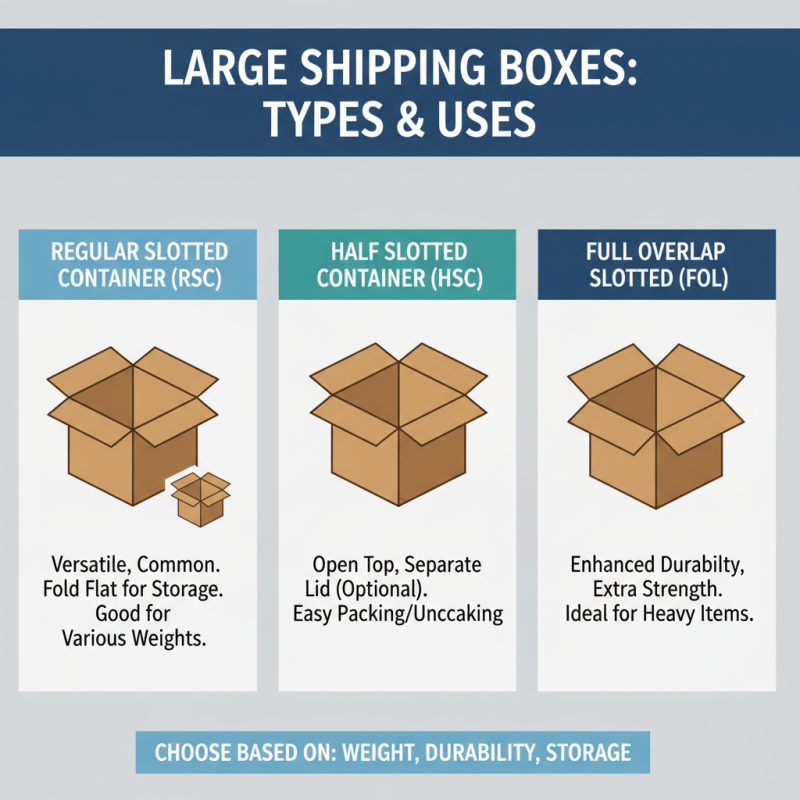
When it comes to large shipping boxes, understanding the different types is essential. There are various styles available. Each type serves a unique purpose. For example, regular slotted containers (RSCs) are versatile and commonly used. They can be folded flat when not in use. This saves storage space. Considerations include weight capacity and durability.
Another option is the die-cut box. These boxes are customizable, providing better protection for fragile items. They come in various shapes and sizes. Choosing the right one may depend on the items being shipped. U-line boxes might suit heavier products.
Tips for selecting large shipping boxes include measuring your items accurately. Ensure they fit snugly without excess space. Using fillers can prevent movement. Additionally, think about the shipping method. Some boxes are better for air travel, while others excel on the ground. Do not overlook the impact of materials; corrugated cardboard is lightweight yet strong. Always test your choice before larger shipments. Aim for reliability to avoid damage in transit.
Factors to Consider When Choosing Large Shipping Boxes
When selecting large shipping boxes, several factors require careful consideration. The box size should match your product dimensions to avoid movement during transit. A proper fit minimizes damage risks. It's vital to think about the weight of your items too. Heavier products need sturdier boxes that can bear the load without breaking.
Material choice is another key aspect. Corrugated cardboard is popular due to its durability. However, other materials like plastic can offer superior protection for fragile items. Think about the shipping environment. Will the box face rain or humidity? Choosing the right material can safeguard your products.
Tips for selection: Measure your items precisely to ensure a good fit. Consider the total weight when choosing the box strength. Always buy a few extra to avoid emergency runs. Reflect on past shipping experiences as they can guide this decision-making process. Not every shipping box will meet every need, so learning from previous choices is crucial.
Assessing the Size and Capacity Requirements for Your Shipment
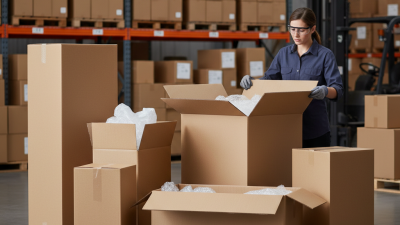
Choosing the right large shipping box starts with assessing your size and capacity needs. Begin by measuring the items you plan to ship. Each box has its dimensions, and knowing your product's size is crucial. For example, if you have fragile items, consider extra space for padding materials like bubble wrap or foam.
Think about the weight of your shipment as well. Heavy items require sturdier boxes with appropriate weight capacity. Pay attention to the box's construction material. Corrugated options can provide better protection. Overpacking a box can lead to damage during transit, so avoid cramming items into small boxes.
Reflecting on past shipments can offer valuable insights. Did anything arrive damaged? Were the boxes too large or too small? These experiences are important. They can guide future decisions. Remember, it's not just about getting the box. It’s about ensuring your shipment arrives safely and intact.
How to Choose the Right Large Shipping Boxes for Your Needs?
| Box Type |
Dimensions (inches) |
Capacity (Cubic Inches) |
Weight Limit (lbs) |
Use Case |
| Regular Slotted Container (RSC) |
24 x 18 x 18 |
5832 |
65 |
General shipping |
| Heavy-Duty Box |
30 x 24 x 24 |
17280 |
100 |
Heavy items |
| Square Box |
20 x 20 x 20 |
8000 |
70 |
Clothing & Apparel |
| Long Box |
48 x 12 x 12 |
6912 |
60 |
Long items (e.g., tubes) |
| Flat Box |
30 x 30 x 5 |
4500 |
50 |
Documents & Folders |
Exploring Material Options for Large Shipping Boxes
Choosing the right material for large shipping boxes is crucial. You might think cardboard is the best option. However, other materials can provide better support. For instance, corrugated cardboard is stronger and offers good insulation. It’s lightweight yet protective, making it popular.
Plastic boxes are another option. They are durable and water-resistant, perfect for sensitive items. However, they can be more expensive, and they might not be as eco-friendly as cardboard. Consider your budget carefully.
Wooden shipping crates are sturdy and reusable. They’re great for heavy or fragile items, but they are often bulky and harder to manage. Reflect on the nature of your shipment. Each material has pros and cons, and the choice depends on specific needs.
Cost Considerations and Budgeting for Shipping Box Purchases
When selecting large shipping boxes, cost considerations are crucial. Pricing can vary widely based on materials and size. Cardboard is often cheaper than plastic, but it may not be as durable for heavy items. Assess your needs before making a purchase. Cheaper boxes might save money upfront but can lead to damage during shipping.
Tips for budgeting wisely:
- Plan your shipping needs in advance. This helps avoid last-minute purchases that may be pricier.
- Look for bulk discounts. Many suppliers offer lower rates for larger orders. It can make a big difference in the overall cost.
- Consider the weight of your contents. Heavier items require sturdier, more expensive boxes.
Not all boxes meet every need. Some may lack robustness, leading to potential issues during transit. Reflect on your shipping history. What worked last time? What didn’t? Analyzing past experiences can guide future purchases. Don’t overlook the importance of quality over cost. A reliable box may protect your shipments better, ultimately saving you money.
Cost Considerations for Large Shipping Boxes