How to Choose the Right Shipping Boxes for Your Business?
Choosing the right shipping boxes is crucial for any business. According to John Smith, an industry expert at Box Solutions, "The right box not only protects your product but also enhances the customer experience." Selecting appropriate shipping boxes involves considering size, durability, and cost. Each decision can impact customer satisfaction.
Shipping boxes come in various shapes and materials. Corrugated boxes, for example, offer excellent protection. Poly mailers, on the other hand, can be lighter and more cost-effective for certain items. It’s essential to analyze your product's needs. Are you using the right box? The wrong choice could lead to damages and unhappy customers.
Reflecting on past shipments can provide valuable insights. Have you noticed any recurring issues? Perhaps your boxes are too tight or flimsy. Improving your selection can significantly affect your business. Investing time in understanding shipping boxes can yield better results. Clear choices today will lead to more successful shipments tomorrow.

Understanding Different Types of Shipping Boxes Available
When selecting shipping boxes for your business, understanding the different types available is crucial. There are standard boxes, custom boxes, padded envelopes, and more. Each type serves a unique purpose. According to a 2022 report by the Packaging Industry Association, over 80% of businesses chose corrugated boxes for shipping due to their durability and cost-effectiveness. However, they may not always be the best fit for fragile items that require more protection.
Consider using padded envelopes for small, lightweight items. They offer flexibility and can save on shipping costs. A study by Market Research Future suggests that lightweight packaging can reduce shipping expenses by up to 40%. Yet, it’s important to ensure that these envelopes provide adequate security for your products.
Custom boxes are another great option. They allow for a tailored fit, reducing the need for additional packing materials. While they may come at a higher cost upfront, businesses save money in the long run by minimizing damage during transit. An analysis of shipping losses indicates that 27% of products are damaged due to improper packaging. Hence, investing in the right type of shipping box might not only enhance customer satisfaction but also significantly cut down on returns.
Assessing the Size and Dimensions for Your Products
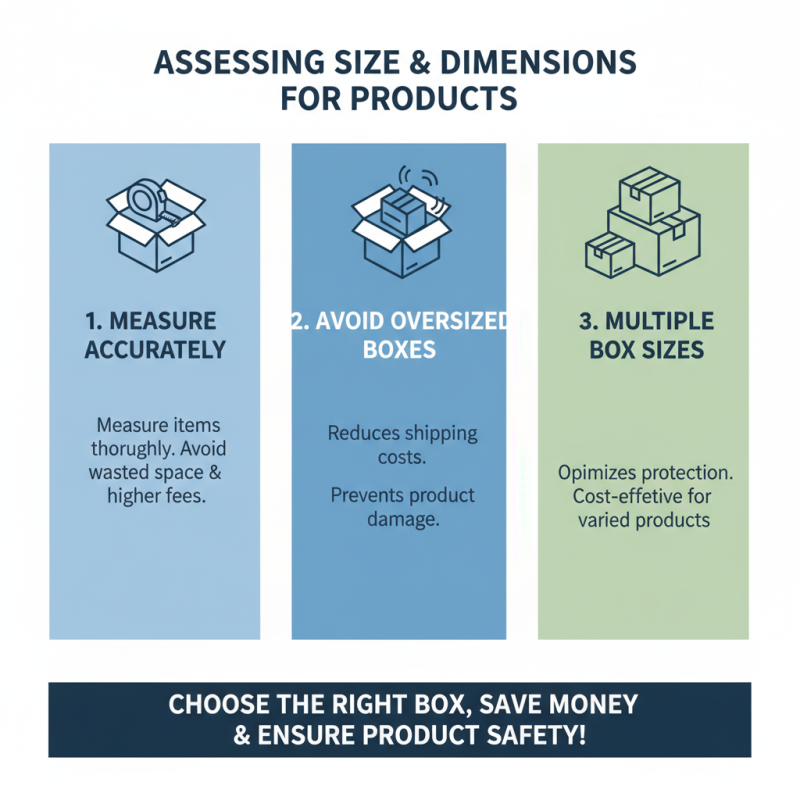
Choosing the right shipping boxes for your products involves careful consideration of size and dimensions. Measure your items thoroughly. Accurate measurements help avoid unnecessary costs. An oversized box can lead to wasted space and higher shipping fees. It may seem convenient to use one box for all products, but this approach often creates problems. Consider using multiple box sizes for different items.
Packaging fragile products requires extra caution. If items move around inside the box, they risk damage. Use packing materials, such as bubble wrap, to fill empty spaces. This added support helps keep items secure. For heavier products, select sturdy boxes that can handle the load. Weak boxes can collapse, leading to customer dissatisfaction and returns.
Think about the unboxing experience as well. A well-fitted box enhances the customer's impression. A tight fit communicates care, while loose packaging feels unprofessional. Reflect on your current box choices. Are they meeting your needs effectively? Regularly reassess your packaging strategy to adapt to changes in product size and shipping requirements. This continuous evaluation can improve your business's efficiency and customer satisfaction over time.
Evaluating Material Strength and Durability Requirements
Choosing the right shipping boxes requires careful consideration of material strength and durability. Each product has unique needs. Heavy or fragile items need boxes with high strength. Assessing the weight and size of your items is crucial. Too often, businesses overlook the importance of appropriate packaging, which can lead to damages during transit.
Corrugated cardboard is a popular choice due to its sturdiness. It comprises multiple layers, providing extra protection. For sensitive items, plastic containers may offer better moisture resistance. However, they can be more expensive and not as eco-friendly. It's a balancing act between cost and protection.
Don't forget to test your boxes. Perform drop tests to evaluate their durability. This simple step can yield critical insights. Sometimes, businesses assume their chosen boxes are sufficient. Ignoring this can result in significant financial losses. Reflecting on past experiences can guide better choices in the future. Always prioritize creating a reliable packaging strategy.
Material Strength and Durability Requirements for Shipping Boxes
Considering Cost-Effectiveness in Shipping Box Choices
When selecting shipping boxes, cost-effectiveness is a crucial factor. According to a report by the Packaging Association, companies can save up to 30% on shipping costs through careful box selection. This can be particularly impactful for small businesses operating on tight budgets. Each box should be evaluated not just for size, but also for weight and material. Lighter boxes reduce shipping fees, while sturdy materials can minimize damage during transit.
Assessing the dimensions is critical. Oversized boxes lead to wasted space and additional charges. The Dimensional Weight Pricing model, used by many carriers, penalizes businesses for inefficient packaging. Selecting the right size prevents this extra cost and optimizes shipping strategies. Some businesses have found success with custom-sized boxes, which eliminate excess space but often require a higher initial investment.
It's essential to balance quality and cost. Cheaper boxes might result in damaged products, leading to returns. The cost of returns can quickly surpass the savings from initially choosing lower-quality packaging. Studies reveal that 25% of consumers won’t repurchase from brands with poor packaging experiences. Investing time into the right shipping box can enhance customer satisfaction and loyalty, ultimately affecting the bottom line.
How to Choose the Right Shipping Boxes for Your Business? - Considering Cost-Effectiveness in Shipping Box Choices
| Box Type |
Dimensions (inches) |
Material |
Cost per Box |
Recommended Use |
| Regular Slotted Container |
12 x 12 x 12 |
Corrugated Cardboard |
$1.00 |
General use for shipping |
| Mailer Box |
10 x 8 x 6 |
Cardboard |
$0.80 |
Flat items, books, electronics |
| Flat Pack Box |
15 x 12 x 3 |
Single Wall Corrugated |
$0.50 |
Apparel, documents |
| Heavy-Duty Box |
18 x 18 x 18 |
Double Wall Corrugated |
$1.50 |
Heavy items, machinery parts |
| Padded Envelope |
10 x 13 |
Kraft Paper |
$0.60 |
Documents, small electronics |