Top 10 Extra Large Moving Boxes for a Stress-Free Move
Moving to a new home can be both an exciting and daunting experience, and one of the most critical aspects of ensuring a smooth transition is having the right packaging materials. Among these, extra large moving boxes stand out as invaluable tools that facilitate the packing process. These spacious boxes are specially designed to hold large items, making them ideal for transporting everything from bedding to kitchenware. By choosing extra large moving boxes, you can minimize the number of boxes needed, thereby streamlining your move and reducing the hassle of handling multiple smaller containers.
In this guide, we will explore the top 10 extra large moving boxes that can help you achieve a stress-free move. Whether you are a seasoned mover or embarking on this journey for the first time, understanding the benefits and uses of these boxes will empower you to pack efficiently and effectively. From their durable construction to their versatile applications, extra large moving boxes are essential for tackling the logistics of any relocation. Join us as we delve into the top choices available, ensuring you are well-prepared for your next big adventure.

The Importance of Extra Large Moving Boxes in Relocation
When planning a relocation, the significance of extra large moving boxes cannot be overstated. These spacious containers are ideal for transporting bulkier items such as bedding, seasonal clothing, or kitchen supplies that can quickly clutter your space. Utilizing extra large boxes streamlines the packing process, enabling you to fit more items into fewer boxes, thereby reducing the number of trips needed during the move. This becomes particularly advantageous when transferring a large household or office, where efficiency can greatly alleviate stress.
Tip: When selecting extra large moving boxes, consider using packing paper or bubble wrap to protect fragile items. This ensures that your belongings arrive at your new location undamaged. Additionally, label each box with its contents and the room it belongs to; this will save you time and effort when unpacking.
Another critical aspect of using extra large moving boxes is their ability to provide a more organized packing strategy. Large boxes can accommodate multiple smaller items, reducing the chances of misplacing smaller cartons. For example, you might use one box for all your kitchen utensils, pots, and pans rather than having several smaller boxes scattered around. This not only simplifies your loading process but also contributes to a tidier moving experience.
Tip: Always remember to distribute the weight evenly when filling these boxes. Heavier items should be placed at the bottom, with lighter items on top, to prevent collapsing and make handling easier. This thoughtful approach will facilitate a smoother and more enjoyable moving experience.
Top 10 Extra Large Moving Boxes for a Stress-Free Move - The Importance of Extra Large Moving Boxes in Relocation
| Box Type |
Dimensions (Inches) |
Weight Capacity (lbs) |
Material |
Best For |
| Extra Large Box A |
24 x 24 x 36 |
65 |
Double-walled corrugated |
Clothes & Linens |
| Extra Large Box B |
30 x 30 x 30 |
75 |
Heavy-duty cardboard |
Kitchen Items |
| Extra Large Box C |
36 x 36 x 48 |
80 |
Reinforced cardboard |
Large Electronics |
| Extra Large Box D |
28 x 28 x 36 |
70 |
Standard cardboard |
Books & Files |
| Extra Large Box E |
32 x 32 x 32 |
65 |
Single-walled cardboard |
Toys & Games |
| Extra Large Box F |
24 x 48 x 48 |
90 |
Heavy-duty double wall |
Large Furniture |
| Extra Large Box G |
36 x 24 x 30 |
70 |
Corrugated cardboard |
Dishes & Glassware |
| Extra Large Box H |
40 x 40 x 40 |
85 |
Recyclable cardboard |
Appliances |
| Extra Large Box I |
34 x 34 x 24 |
60 |
Durable cardboard |
Fashion & Accessories |
| Extra Large Box J |
48 x 24 x 48 |
100 |
Heavy-duty cardboard |
Miscellaneous Large Items |
Key Features to Consider When Choosing Extra Large Moving Boxes
When selecting extra large moving boxes, several key features should be kept in mind to ensure a smooth and efficient relocation process. First and foremost, the material of the boxes is crucial. Opt for boxes made from sturdy, double-walled cardboard, as this offers better protection for your belongings. Reinforced edges and seams can significantly increase the box's durability, allowing it to hold heavier items without risking damage during transport.
Another essential factor to consider is the box size and capacity. Extra large boxes vary in dimensions, so it’s vital to choose those that can accommodate your largest items while remaining manageable for lifting and moving. Pay attention to the weight limit of each box; overloading can lead to tears or collapses. Additionally, look for boxes with handles or cut-outs, which facilitate easier carrying and stacking. Finally, consider boxes that are eco-friendly or recyclable, as sustainability is becoming increasingly important in today's moving practices.
Top Brands and Their Ratings for Extra Large Moving Boxes
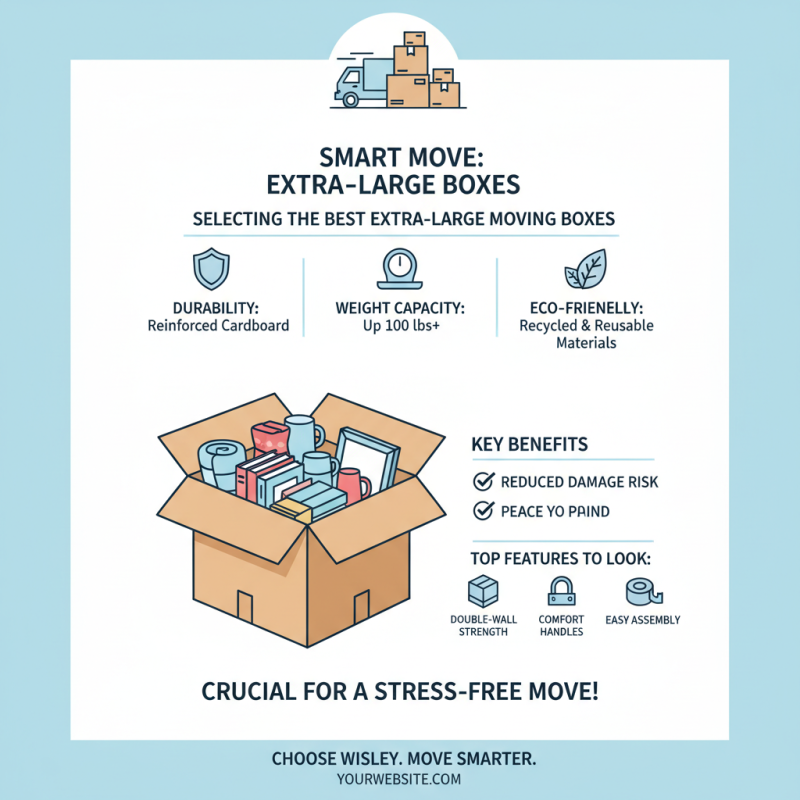
When preparing for a move, selecting the right extra large moving boxes is crucial to ensure a smooth and stress-free experience. The best-rated brands provide various options to accommodate different needs. Look for features such as durability, weight capacity, and eco-friendliness. High-quality moving boxes can significantly reduce the risk of damage to your belongings, ensuring that your items arrive at your new location in perfect condition.
**Tips:** When choosing extra large moving boxes, consider how you will organize your items. Labeling each box clearly will save you time during the unpacking process. Additionally, using packing paper or bubble wrap to fill gaps will prevent items from shifting during transport.
Another essential aspect is to review customer ratings and reviews of different brands. A box that comes highly recommended will often indicate reliability and quality. Pay attention to feedback regarding the boxes’ sturdiness and ease of assembly. Understanding what others have experienced can guide you toward making the best decision for your moving needs.
**Tips:** Always overestimate the amount of space you’ll need. It’s better to have too many boxes than not enough, and extra large boxes can be used for multiple light items to optimize space and efficiency.
Comparative Analysis of Material Durability in Moving Boxes
When selecting extra-large moving boxes, the material's durability is a critical factor that directly impacts the safety of your belongings during transit. Typically, cardboard is the most common material; however, the quality varies significantly between different boxes. High-strength corrugated cardboard is often preferred for its superior capacity to withstand weight and resist crushing. Its layered design distributes stress more evenly, making it ideal for heavy items such as books or kitchenware. Moreover, moisture resistance can be a vital feature, as it protects contents from unexpected spills or humidity during the move.
Additionally, plastic moving boxes present an alternative with heightened durability and resilience. Unlike cardboard, plastic boxes are water-resistant, reusable, and less prone to tearing or collapsing under pressure. They are ideal for long-term storage as well, providing protection against pests and environmental factors. While they tend to be more expensive upfront, the investment can pay off in terms of longevity and multiple uses. Ultimately, understanding these material differences can help you make an informed decision, ensuring your move is as stress-free as possible.
Cost-Effectiveness of Buying Extra Large Moving Boxes vs. Renting Them
When planning a move, one of the critical decisions is whether to buy or rent extra-large moving boxes. Buying boxes might appear more expensive at first glance, especially for people on a tight budget, but it can often turn out to be a cost-effective option in the long run. Purchasing boxes means you can reuse them for future moves or store them safely for various purposes, reducing the overall expenditure over time. Moreover, having a set of sturdy boxes ready for any eventuality can save you the hassle of last-minute arrangements.
On the other hand, renting boxes may seem appealing due to the lower upfront costs, but it can introduce hidden expenses. Rental fees accumulate over time, and if you're unable to return the boxes within the stipulated time frame, you may end up paying more than expected. Additionally, the availability of rental boxes might limit your options in terms of size and durability, leading to potential challenges during the packing process. Ultimately, individuals must weigh their moving needs against their budget and consider not just the immediate costs but the long-term benefits associated with buying extra-large moving boxes.