Top 10 Types of Bulk Boxes for Global Buyers?

Choosing among bulk boxes is not a simple purchasing exercise. Each design must survive lifting, stacking, moisture, vibration, and repeated handling. Global buyers also compare unit cost, storage efficiency, pallet fit, and end-of-life options. Small details matter. A crushed corner can expose products, delay a shipment, or create avoidable waste.

Walter Soroka, a respected packaging author, states, “The primary function of packaging is to protect the product.” This principle remains practical for modern bulk boxes. Protection must match the product, transport route, warehouse conditions, and expected handling pressure. A corrugated pallet box may suit lightweight agricultural goods, while a rigid plastic box can support repeated warehouse use. Wooden boxes may provide strength for heavy components, but they require careful moisture control and responsible sourcing. Flexible intermediate bulk containers can save storage space, yet they demand suitable filling, lifting, and discharge procedures.

This guide examines ten common types of bulk boxes used by international buyers. It considers construction, load capacity, reusability, stacking behavior, customization, and disposal planning. The ranking is not absolute. No single box wins every route. A low-cost option may perform poorly in humid storage. A durable box may become inefficient when return transport is expensive. Those trade-offs deserve honest attention. Product weight, dimensions, handling equipment, and destination requirements should be confirmed before purchase. Testing remains essential. Samples, compression trials, and real route evaluations can reveal weaknesses that product sheets miss. Reliable sourcing also includes clear specifications, traceable materials, and compliance with applicable packaging and transport requirements.
Top 10 Types of Bulk Boxes for Global Buyers?

Bulk Box Basics: Purpose, Capacity, Materials, and Global Uses

Bulk boxes protect, group, and move large quantities with fewer handling steps. Their design depends on purpose, load weight, access, and storage conditions. Common types include corrugated boxes, wooden crates, rigid plastic boxes, foldable plastic boxes, wire mesh boxes, pallet boxes, insulated boxes, hopper boxes, bulk bags, and liquid containers. Each format solves a different handling problem.

Capacity usually ranges from small 100-liter units to containers exceeding 1,000 liters. A 600-liter box may hold packaged food, machine parts, or agricultural produce. However, internal volume is not the same as safe working load. Buyers should check stacking height, floor strength, center of gravity, and forklift entry points. A box can look large but perform poorly when overloaded.

Materials shape durability and cost. Corrugated fiberboard is light and suitable for short transport cycles. Wood offers strength but needs careful moisture control and export treatment. Reusable plastic resists water and repeated washing. Wire mesh improves visibility and airflow. Insulated materials help protect temperature-sensitive goods during approved transport. Global buyers also need food-contact documents, recycling information, and clear measurement units. Regional pallet sizes can create unexpected gaps. That small detail matters.

Warehouse trials often reveal problems that product sheets miss. A lid may bend, a latch may loosen, or a narrow aisle may limit access. A practical test with the actual product, pallet, and handling equipment remains valuable. Perfect specifications are rare. Careful checking is not.

The Top 10 Bulk Box Types by Design, Load, and Handling Method

Top 10 Types of Bulk Boxes for Global Buyers?

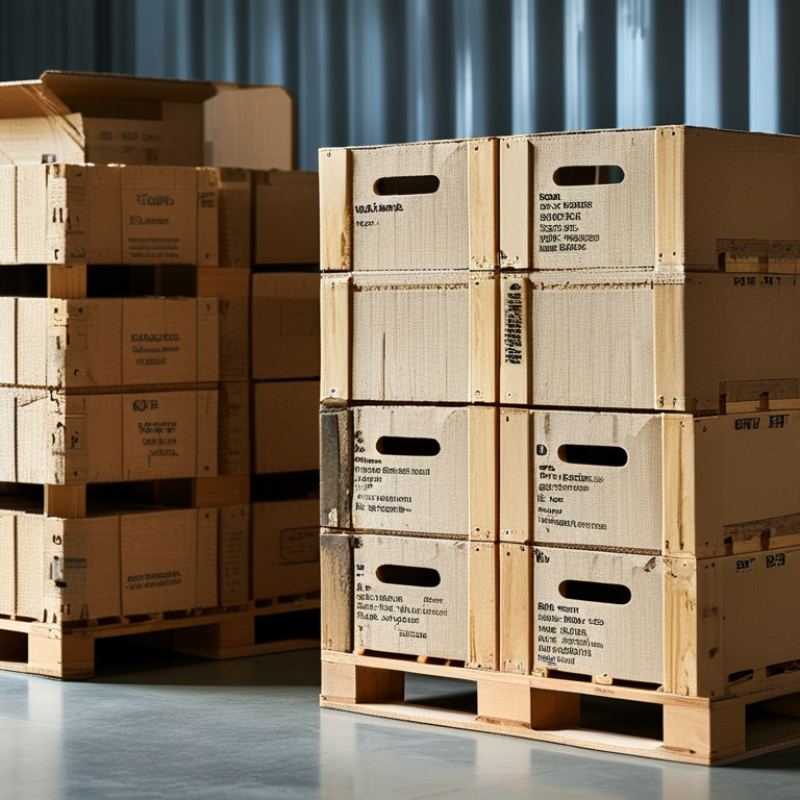
The best bulk box depends on design, load, and handling method. Single-wall corrugated boxes suit light goods and short routes. Double-wall boxes offer stronger stacking for heavier products. Triple-wall boxes handle demanding export loads, but their extra material increases cost. Octagonal corrugated boxes provide efficient pallet use and better compression resistance. Pallet boxes combine a large carton with a wooden or plastic base. Sleeve packs use separate walls and pallets, allowing easier replacement after damage. Attached-lid boxes protect small components during repeated handling. Collapsible plastic boxes save warehouse space when empty. Rigid plastic bins support repeated washing and long service. Flexible intermediate bulk containers can carry roughly 500 to 2,000 kilograms, depending on certified design and filling conditions.

Handling details matter. Forklift-entry pallet boxes reduce manual lifting. Four-loop bulk bags suit crane or forklift lifting when their safe working load is verified. The ISO 21898 standard sets performance requirements for flexible intermediate bulk containers. UNCTAD’s Review of Maritime Transport reports that around 80% of global merchandise trade by volume moves by sea, where moisture, stacking, and vibration expose weak packaging. The World Bank’s 2023 Logistics Performance Index also highlights the importance of reliable handling and shipment visibility. In practice, buyers should test filled boxes, not empty samples. That mistake is common. One box may pass a warehouse test but fail after humidity exposure.

Tips: Match the box to the product’s density, not only its weight. Check pallet dimensions, forklift clearance, moisture protection, and certified load limits. Request compression and drop-test records. Also question the forecasted reuse cycle; real handling is usually rougher than planned.

How to Match Each Bulk Box Type With Products and Supply Chains

Matching a bulk box to a product starts with weight, shape, and handling conditions. Corrugated cartons suit light, dry goods and fast-moving warehouse orders. Double-wall cartons provide stronger stacking for canned products, tools, and dense components. Triple-wall cartons protect very heavy items during long inland or ocean routes. Gaylord boxes work well for loose parts, recycled materials, and large production runs.

Wooden crates fit machinery and products needing rigid protection. Plastic totes support repeated distribution cycles and clean storage. Pallet boxes simplify forklift handling for bulky inventory. Wire containers improve visibility for durable parts in controlled warehouses. Flexible bulk bags suit dry powders and granules, while insulated boxes help temperature-sensitive goods. The supply chain matters as much as the product. A box crossing humid ports needs moisture resistance, secure strapping, and stable pallet dimensions. A reusable container needs a return plan, or its cost advantage may disappear.

Tips: Test the packed box under real stacking pressure. Check corner damage after vibration trials. Leave enough headspace for cushioning, but not enough for movement. Confirm pallet size before production. In my experience, buyers often choose the strongest box too quickly. That can increase freight costs and create empty space. One judgment can still be wrong. Review damage records, loading photos, and warehouse feedback before placing a large order. Testing with one mixed shipment is often more revealing than a perfect specification sheet.

Top 10 Types of Bulk Boxes for Global Buyers

Matching bulk-box formats with products, handling requirements, and international supply chains

Corrugated bulk box: Suitable for packaged food, consumer goods, and short-to-medium export cycles where low tare weight matters.
Pallet box: Works well for mixed cartons, industrial parts, and warehouse distribution built around standard pallet footprints.
Octabin: Commonly matched with powders, granules, flakes, and other dry bulk materials that benefit from efficient cube utilization.
Wooden crate: Best for machinery, castings, and heavy or fragile products requiring strong impact and stacking protection.
Rigid plastic bulk box: Suited to automotive, agricultural, and reusable closed-loop supply chains requiring washability.
FIBC bulk bag: Efficient for powders, grains, minerals, and chemicals when flexible storage and high payload density are priorities.
Wire-bound crate: Useful for produce and ventilated goods that need airflow, visibility, and moderate mechanical protection.
Reusable plastic pallet box: Appropriate for repeated domestic or regional transport of parts, produce, and distribution-center loads.
Foldable bulk container: Helps reduce return freight and empty-storage volume in multi-leg supply chains.
Steel stillage: Designed for dense metal parts, castings, and industrial components requiring high durability and repeated handling.

The chart uses representative payload capacities in kilograms for commonly specified commercial formats. Actual capacity depends on box dimensions, material grade, stacking pattern, liner, moisture exposure, handling equipment, and applicable transport regulations.

International Buying Factors: Standards, Shipping, Reuse, and Cost

Top 10 Types of Bulk Boxes for Global Buyers?

Global buyers compare FIBC bags, corrugated bulk bins, pallet boxes, collapsible crates, and insulated containers. Each format serves a different supply chain. Standards matter before price. ISO 21898 covers flexible intermediate bulk containers, while ISTA test procedures help evaluate packaged loads during transport. Food, chemical, and agricultural goods may require separate material controls. Ask for test certificates, safe working load data, and clear inspection records. A cheap box without evidence can become an expensive delay.

Shipping changes the real cost. Measure folded volume, stack height, container utilization, and port handling requirements. The World Bank’s Logistics Performance Index 2023 shows major differences in customs, infrastructure, and delivery reliability across markets. A reusable box may travel efficiently, but reverse logistics can erase its benefit. OECD’s Global Plastics Outlook reported 353 million tonnes of plastic waste in 2019, with only 9% recycled. That figure strengthens the case for durable designs, although reuse is not automatically greener.

Tips: Request a landed-cost quote, not only a unit price. Test one loaded sample through actual handling conditions. Check whether repairs are practical near the destination. Keep a small safety stock. It feels inefficient, sometimes it prevents costly stoppages. Buyers should also record cleaning cycles, return rates, and damage patterns. Those details expose weak assumptions and improve the next purchase.

Bulk Box Selection Checklist for Global Buyers and Importers

Top 10 Types of Bulk Boxes for Global Buyers?

Bulk Box Selection Checklist for Global Buyers and Importers

Global buyers can choose from corrugated bulk boxes, reusable plastic boxes, collapsible bins, pallet boxes, rigid-wall containers, insulated boxes, ventilated boxes, moisture-resistant boxes, partitioned boxes, and stackable heavy-duty boxes. Each type serves a different shipping condition. Corrugated boxes reduce shipping weight, while plastic and rigid-wall options suit repeated warehouse handling. Insulated designs protect temperature-sensitive products during short transport periods.

Start with the product, not the box price. Record the product weight, dimensions, moisture exposure, stacking height, and loading method. Confirm the box’s compression strength and pallet footprint. A box that fits one warehouse may waste space in another. Check closure design, lifting access, ventilation, and whether empty units can collapse for return shipping. Small details matter.

Ask suppliers for material specifications, test reports, and sample units. Food-contact applications may require suitable documentation. Confirm labeling and packaging requirements for every destination country. A trial shipment can expose weak corners, loose lids, or unexpected moisture damage. Do not skip it. I would also compare total landed cost, including freight, storage, disposal, and return handling. The cheapest box may become expensive after one rough transfer. Real conditions are rarely as clean as the specification sheet.

Top 10 Types of Bulk Boxes for Global Buyers? - Bulk Box Selection Checklist for Global Buyers and Importers

Comparison of common bulk-container formats, typical specifications, applications, and key purchasing checks

No. Bulk Box Type Typical Construction Typical Capacity and Load Range Common Applications Main Advantages Important Limitations Global Buyer Selection Checklist
1 Flexible Intermediate Bulk Container (FIBC) Woven polypropylene fabric with lifting loops, filling inlet, and discharge outlet; available in coated or uncoated versions. Approximately 0.5–2.0 m³; commonly designed for about 500–2,000 kg, depending on construction and product density. Powders, granules, agricultural products, minerals, chemicals, construction materials, and food ingredients. Lightweight, foldable when empty, space-efficient for return transport, and available with many liner and outlet options. Less suitable for sharp products, prolonged outdoor exposure, or applications requiring rigid protection. Confirm safe working load, safety factor, fabric coating, liner material, sift-proof seams, UV requirements, food-contact or hazardous-goods documentation, and lifting-loop design.
2 Composite IBC Tote Rigid plastic inner bottle, usually housed in a galvanized steel tubular cage, with a pallet base, top fill opening, and bottom valve. Common nominal sizes include 600 L, 1,000 L, and 1,250 L; many models support approximately 1,000 kg, subject to product density and design. Liquids, semi-liquids, food ingredients, detergents, coatings, and industrial chemicals. Standardized footprint, efficient liquid handling, stackability, integrated valve, and good warehouse compatibility. Valve and bottle damage can cause leakage; used units may require inspection, cleaning, or reconditioning. Verify liquid compatibility, UN certification where required, valve type, gasket material, pallet condition, stack rating, cleaning status, and applicable import regulations.
3 Corrugated Bulk Box or Octabin Heavy-duty corrugated fiberboard, often octagonal or rectangular, with a separate pallet, liner, lid, or reinforced base. Commonly about 0.5–2.0 m³; payload often ranges from approximately 300–1,500 kg depending on board grade and product. Dry powders, food ingredients, chemicals, plastic pellets, agricultural goods, and recyclable materials. Low tare weight, economical production, recyclable material options, and efficient one-way export use. Moisture and puncture resistance are lower than those of plastic or metal containers unless coated or lined. Check board grade, edge-crush strength, liner specification, moisture protection, pallet compatibility, stacking height, compression testing, and recycling requirements.
4 Wire Mesh Stillage or Wire Collapsible Box Welded steel wire panels with a steel frame, hinged or removable sides, and a pallet-style base. Typically about 0.5–1.5 m³; common working loads range from approximately 500–1,500 kg. Metal components, automotive parts, machinery components, returnable packaging, and warehouse storage. Strong ventilation, visible contents, good durability, and reduced return volume when collapsible. Small products may fall through the mesh; exposed steel can corrode in humid or salt-air environments. Review mesh aperture, working load, stacking load, hinge and latch quality, surface treatment, forklift entry, nesting ratio, and corrosion protection.
5 Rigid Plastic Pallet Box Injection-molded or rotationally molded HDPE or other durable plastic, with solid walls and an integrated pallet base. Usually about 300–1,200 L; payload commonly ranges from approximately 300–1,500 kg, depending on design. Fresh produce, meat and seafood, industrial parts, waste handling, and reusable distribution systems. Washable, moisture-resistant, reusable, and suitable for hygienic or outdoor applications. Higher purchase cost and return-transport volume than collapsible or disposable boxes; performance may change under extreme temperatures. Confirm food-contact suitability if needed, wall thickness, drainage holes, temperature range, stack rating, forklift access, cleaning method, and dimensional compatibility.
6 Collapsible Plastic Bulk Box Reusable plastic container with hinged or removable walls that fold down when empty, often with an attached pallet base and lid. Commonly about 400–1,000 L; working loads often fall between approximately 300–1,200 kg. Automotive supply chains, electronics, agricultural products, retail distribution, and closed-loop logistics. Substantially reduces empty-return volume, provides consistent dimensions, and resists moisture and many chemicals. Folding hinges, doors, and locking mechanisms may require maintenance; load capacity can be lower when collapsed or stacked. Measure folded and erected dimensions, verify return-load ratio, inspect hinge durability, confirm lid security, stack performance, drainage, and repair-part availability.
7 Wooden Pallet Box Solid wood boards or plywood panels mounted on a pallet base, with optional lid, blocks, and internal bracing. Approximately 0.5–3.0 m³; payload varies widely, often around 500–2,000 kg when properly reinforced. Heavy machinery parts, industrial components, agricultural products, and general export packaging. Good rigidity, easy customization, relatively low material cost, and suitability for heavy or irregular loads. Absorbs moisture, can splinter, is less space-efficient when empty, and may require treatment for international shipment. Confirm wood-treatment and marking requirements, moisture content, fastener quality, internal bracing, lid design, forklift entry, gross weight, and export packing regulations.
8 Steel Stillage or Heavy-Duty Metal Bulk Box Welded carbon-steel or stainless-steel frame with solid, perforated, or sheet-metal panels; may include doors, lids, or forklift pockets. Commonly about 0.5–2.0 m³; working loads may range from approximately 500–3,000 kg depending on frame and base design. Automotive parts, heavy machinery, castings, metal products, construction components, and industrial returnable packaging. High strength, long service life, strong impact resistance, and suitability for heavy loads. Heavy tare weight, higher freight cost, potential corrosion, and substantial empty-return volume unless stackable or nestable. Check working and stacking loads, weld quality, steel grade, coating system, corrosion resistance, forklift pockets, door operation, nesting or stacking ratio, and dimensional tolerances.
9 Plywood Export Bulk Crate Engineered plywood panels fixed to a timber or plywood frame, with reinforced corners, base skids, and optional moisture barriers. Often about 1–10 m³; payload depends on the frame, base, and internal bracing and may range from several hundred kilograms to multiple tonnes. Large machinery, electrical equipment, industrial assemblies, fragile components, and high-value export cargo. Good protection against impact and abrasion, customizable internal supports, and a smoother surface than rough-sawn timber. Usually intended for one-way shipment; poor design can result in panel deformation, condensation, or difficult unpacking. Specify internal blocking and bracing, center-of-gravity marks, lifting points, moisture-barrier requirements, shock protection, gross weight, and compliant wood-packaging materials.
10 Plastic or Steel Bin with Drop Door Rigid bulk bin with solid walls and a front access door or discharge opening; manufactured from heavy-duty plastic or coated steel. Typically about 400–1,500 L; payload commonly ranges from approximately 500–2,000 kg, depending on material and construction. Bulk material storage, warehouse picking, recycling, waste collection, food processing, and manufacturing operations. Fast access to contents, easy forklift handling, stable stacking, and efficient use in production or warehouse areas. Door seals and hinges can wear; the opening may reduce structural strength if poorly engineered or overloaded. Verify door clearance, latch safety, leakage control, load distribution, stack rating, material compatibility, cleaning access, forklift pockets, and operator safety features.
Note: Capacity and load figures are typical market ranges rather than universal specifications. Buyers should confirm the exact technical drawing, safe working load, stacking limits, material compatibility, packaging regulations, and required certifications before placing an import order.