China Top 10 Packaging Boxes Manufacturers for Global Buyers
Choosing reliable packaging boxes manufacturers can shape product protection, presentation, and long-term supply stability. For global buyers, the decision involves more than comparing factory prices. Material quality, structural design, printing accuracy, production capacity, and communication all deserve close attention.
This guide introduces China’s top 10 packaging boxes manufacturers for international purchasing teams. It considers practical evidence, including manufacturing experience, customization options, quality control procedures, export support, and client feedback. Some suppliers specialize in rigid gift boxes, while others focus on corrugated shipping cartons, folding cartons, or sustainable paper packaging. Their capabilities are not identical.
Small details matter. A magnetic box should close evenly. A shipping carton should resist pressure during handling. Printed colors should remain consistent across repeat orders. These points sound simple, yet they often separate dependable suppliers from attractive but inconsistent choices. Factory audits, product samples, certifications, and clear quotations can improve buyer confidence.
No ranking is perfect. Supplier performance may change with materials, order volume, staffing, or market conditions. Buyers should verify current information before signing a contract. I have also found that fast replies do not always indicate strong production control. That is worth remembering.
The following overview offers a practical starting point for comparing Chinese manufacturers. It supports informed decisions without treating any single supplier as suitable for every project. End-use requirements, budget, delivery schedule, and regional compliance should guide the final selection.
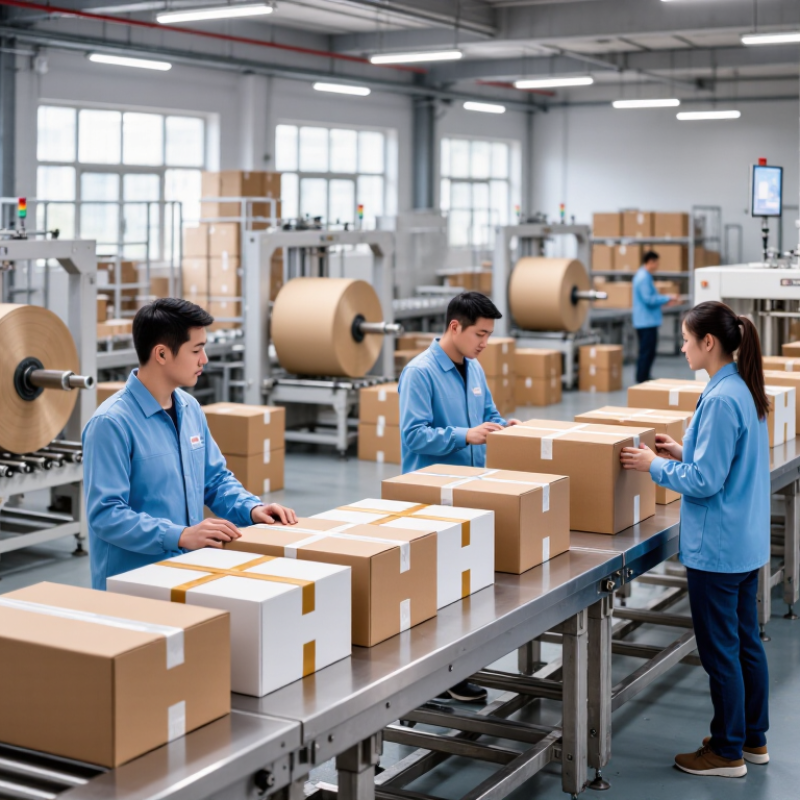
What Makes a Leading Packaging Box Manufacturer in China
A leading packaging box manufacturer in China combines practical experience with disciplined engineering. Its team understands how paper weight, folding structure, and coating affect product protection. It should ask about transport distance, storage humidity, stacking pressure, and opening habits. Small details matter. A strong factory develops samples before mass production. Designers check fit by hand, not only on screens. They also record revisions, so buyers can trace why a material or structure changed.
Reliability appears in repeatable production. Clear purchase specifications should cover board grade, dimensions, color tolerance, printing method, glue, and packing quantity. Quality staff inspect incoming materials, first articles, and finished cartons. They should use measurable checks, such as edge-crush strength, drop simulation, and rub resistance, when suitable. Independent testing may support technical claims. Honest communication matters more than optimistic promises. If a finish increases scuffing or delays drying, the supplier should say so early.
Professional manufacturers also manage compliance responsibly. They can provide material declarations, production records, and relevant test documents for the target market. Secure data handling protects artwork and commercial information. Experienced export teams explain lead times, carton loading, and inspection arrangements clearly. Still, no factory is perfect. A sample may pass visual review yet reveal a weak corner during transport. That finding should trigger a design change, not an excuse. Buyers can improve results by reviewing samples, inspection records, and corrective actions before confirming larger orders.
Key Criteria for Ranking China’s Top Packaging Box Manufacturers
China Top 10 Packaging Boxes Manufacturers for Global Buyers
Ranking China’s leading packaging box manufacturers requires more than comparing factory prices. Smithers’ The Future of Global Packaging to 2028 projects the global packaging market will exceed US$1.2 trillion by 2028. This growth increases pressure on suppliers to deliver stable quality, flexible production, and reliable export support. A serious ranking should examine factory experience, material control, printing accuracy, structural design, and production capacity.
Quality systems deserve close attention. Buyers should request audit records, material specifications, test results, and traceable production samples. Useful checks include compression strength, moisture resistance, color consistency, and dimensional tolerance. Manufacturers serving overseas buyers should understand FSC-related sourcing requirements, packaging waste rules, and destination-market labeling obligations. ISO 9001 certification can support process control, but certification alone proves little. Factory discipline matters more.
Sustainability must also carry measurable weight. The Global Resources Outlook 2024 warns that global material extraction could rise substantially without stronger resource efficiency. Therefore, rankings should assess recycled content, paper sourcing, ink selection, lightweight design, and waste recovery. Delivery performance, minimum order quantity, tooling costs, payment clarity, and after-sales communication also affect the final score. A low quotation may hide expensive revisions. Perfect ranking is unrealistic. I would still prioritize documented evidence over polished presentations, because one attractive sample cannot represent every production batch.
China’s Top 10 Packaging Box Manufacturers for Global Buyers
China’s Top 10 Packaging Box Manufacturers for Global Buyers
China’s Top 10 Packaging Box Manufacturers for Global Buyers should be judged by evidence, not attractive catalogs. Smithers’ The Future of Global Packaging to 2028 estimates that the global packaging market will rise from about US$1.17 trillion in 2023 to US$1.33 trillion in 2028. This growth increases pressure on Chinese suppliers to deliver stable quality, faster sampling, and export-ready documentation. The strongest manufacturers usually offer rigid boxes, folding cartons, corrugated packaging, and custom inserts. Buyers should inspect paper weight, board moisture, color tolerance, and glue strength. A neat showroom proves very little.
Production experience matters during real shipping. Ask for compression-test records and samples from the same production line. ISO 2859-1 sampling plans can support consistent inspections. For e-commerce orders, ISTA-based drop testing helps reveal weak corners and loose inserts. McKinsey’s 2023 global consumer research found that 60% to 70% of respondents may pay more for sustainable packaging. However, recycled content can affect stiffness, print density, and surface smoothness. Sustainability claims need test reports, not vague promises. No ranking is flawless; a supplier strong in luxury boxes may perform poorly with high-volume cartons.
Tips: Request a physical prototype before mass production. Confirm dielines, packed dimensions, and tolerance limits in writing. Compare three quotations using the same specifications. Check factory capacity during peak seasons. I would also review a small pilot order, because spreadsheets often hide practical defects.
China Top 10 Packaging Boxes Manufacturers for Global Buyers
Common Corrugated Flute Profiles Used in Export Packaging
Corrugated flute selection affects box strength, cushioning, printability, and shipping efficiency. The chart shows commonly referenced nominal flute heights: F and E flutes are typically used for small retail packaging, while B, C, and A flutes provide progressively greater cushioning and stacking performance. Actual specifications may vary by paper grade, supplier, and applicable industry standard.
Product Range, Customization, Quality, and Production Capabilities
China’s leading packaging box manufacturers serve buyers across retail, gifting, cosmetics, electronics, and food-safe applications. Their product ranges may include rigid boxes, folding cartons, magnetic closures, drawer boxes, and corrugated shipping packs. Experienced suppliers usually recommend materials after checking product weight, moisture exposure, stacking needs, and destination conditions. A beautiful box can still fail in transit.
Customization goes beyond color and logo placement. Buyers can request paper texture, foil stamping, embossing, window films, inserts, handles, and special opening structures. Good manufacturers provide dielines, digital mockups, and physical samples before mass production. Ask for measured tolerances. Small errors can affect inserts, lids, and automated packing lines. I have found that clear specifications reduce revisions more than attractive presentations do.
Quality control should cover paper thickness, print registration, edge finishing, adhesive strength, and carton compression. Reliable factories often use inspection points from material receiving through final packing. Production capability also matters: confirm monthly capacity, sampling time, equipment, and peak-season planning. A factory may accept a large order but struggle with consistent color across batches. That risk deserves an honest discussion. Even a strong supplier can miss a detail when the brief is vague. Independent inspections, retained samples, and written approval records create practical accountability for international buyers.