China Top Small Cardboard Boxes Suppliers for Global Buyers
China’s small cardboard boxes suppliers serve buyers who need compact, protective packaging without unnecessary bulk. The choice affects more than unit price. Board grade, box dimensions, print consistency, and packing strength can change freight efficiency and damage rates. A box that looks neat on a sample table may still fail after a long, damp journey.
Industry reports offer useful context. Smithers’ The Future of Corrugated Packaging to 2028 examines market demand, material use, and regional developments. FEFCO’s European Database Report tracks corrugated-board production and consumption, giving buyers a benchmark for a major packaging market. These reports do not rank Chinese factories. They do show why sourcing decisions should consider material performance and supply capacity, not price alone. Ask for recent test records, production samples, and clear specifications. Check whether quoted dimensions refer to the inside or outside of the box. That small detail can cause a real mismatch.
Circular-economy researcher Walter R. Stahel is often associated with the principle, “The shorter the loop, the more profitable it is.” For buyers, it is a useful reminder to consider recyclable materials and efficient shipping alongside cost. Yet no supplier wins every metric. A lower quote may mean thinner board, while a premium finish may add little practical value. This guide introduces leading Chinese suppliers and the questions global buyers can ask before placing an order. Use it as a starting point, not a substitute for sample checks and factory verification.

What Small Cardboard Boxes Are and How They Are Made in China
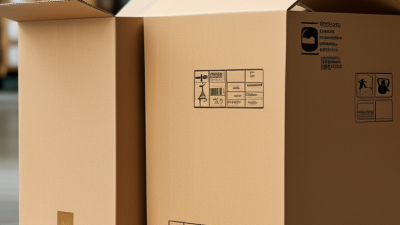
Small cardboard boxes are compact paperboard packs used for samples, accessories, cosmetics, and lightweight parts. “Small” has no universal industry definition; buyers usually specify internal length, width, and depth. A box can use solid paperboard or corrugated board, which sandwiches a wavy flute between flat liners. That flute adds cushioning. It also affects thickness and usable space.
China’s manufacturing base is substantial. The China Paper Association’s 2023 annual report recorded 129.65 million tonnes of paper and paperboard production. This figure covers the wider paper sector, not box output alone, but it helps explain local material availability. In a typical process, a converter selects liner and flute grades, feeds sheets through corrugating rollers, then prints, die-cuts, folds, and glues them. Simple samples help check fit. Small tolerances matter.
Buyers should share product weight, dimensions, shipping conditions, and preferred opening style before requesting a quotation. Factories may recommend single-wall corrugated board for light protection, while solid board suits a clean retail finish. Moisture can soften paper, and heavy ink coverage may affect folding. These details are easy to overlook. Even a neat sample may behave differently after long-distance transit, so test packed boxes under realistic handling conditions.
Key Capabilities Offered by Chinese Small Box Suppliers
Chinese small-box suppliers can support more than basic folding-carton production. Their capabilities often include structural design, material selection, printing, finishing, and sample testing. A buyer can provide product dimensions and weight, then review a dieline and physical prototype before ordering. This matters when a box must hold a glass jar, fit a mailer, or display clearly on a retail shelf. Ask suppliers to specify board grade, flute type, internal dimensions, and acceptable size tolerances. Small details matter.
Production checks should cover print color, crease quality, glue strength, and carton dimensions. Request samples from the intended production process, not just a digitally printed mock-up.
Eurostat’s 2022 packaging-waste data indicate that roughly four-fifths of paper and cardboard packaging in the EU was recycled, making fiber packaging a familiar part of established recovery systems. That figure does not prove every box is recyclable; coatings, inks, and local collection rules can affect the outcome.
Suppliers should explain material choices and provide test records where relevant.
Still, samples can vary. I would compare several units from a batch, because a clean prototype does not guarantee consistent production.
How Global Buyers Can Compare Supplier Types and Product Options
Global buyers comparing small cardboard box suppliers should look beyond unit price. A converter with in-house printing may handle custom sizes and color matching more directly. A trading supplier may offer broader product access, but production details can take longer to confirm. Ask where the boxes are made, which board grades are available, and whether samples come from the actual production line.
Product choices affect protection and cost. Single-wall corrugated boxes suit many lightweight items, while heavier contents may need stronger board or internal inserts. For small components, measure the packed item, not just the product. Allow space for cushioning and easy closure. Compare dimensions, board thickness, flute type, print coverage, and folding style on one specification sheet. Request both a flat sample and an assembled sample. Photos can hide weak corners. Quotes are not always directly comparable; tooling or packing charges are easy to overlook.
Tips: Send the same drawing and order quantity to every supplier. Ask for a sample, lead time, carton count, and quote validity in writing. Check whether dimensions are internal or external. Keep one approved sample for later checks. Small differences matter.
Steps for Verifying Suppliers, Samples, and Quality Standards
When comparing small cardboard box suppliers, verify more than the product photos. Request a registered business address, recent production images, and references from buyers with similar order sizes. Ask how the supplier handles changes in paper grade, print color, or delivery dates. Clear answers matter. Vague promises are a warning, though they do not prove poor quality.
Order a sample made with the same board grade, dimensions, and finish planned for production. Check whether it folds squarely and stays shut after repeated handling. Place a small item inside, then test the box during a short drop and stacking check. Measure the inside space, not just the outside. A sample can still differ from a full run, so agree on written tolerances and approval steps before production.
Tips: Keep records. Photograph the sample beside a ruler, and save the approved specification. Ask for the board’s stated thickness and flute type, then compare delivered boxes against them. Inspect several cartons, not only the first one. Minor color shifts can be hard to judge under warehouse lighting; use consistent light where possible. Even careful checks have limits, so leave time for corrections.
Ordering, Packaging, and Shipping Small Cardboard Boxes Internationally
For international orders, confirm the box’s internal dimensions, board strength, and unit count before approving production. A box that fits a product snugly can reduce movement, but tight packing may crush delicate corners. Ask the supplier for a sample and test it with the actual item, cushioning, and shipping carton. One overlooked detail: product dimensions alone do not show how much protective space is needed.
Shipping plans matter, even for small boxes. UNCTAD’s Review of Maritime Transport 2024 reports that around 80% of world merchandise trade by volume moves by sea. Ocean freight can mean longer exposure to humidity, stacking pressure, and handling. Specify how boxes should be bundled, wrapped, and palletized, and request clear outer-carton labels. For air shipments, check dimensional weight with the carrier; lightweight cartons can still incur higher charges if they take up excess space. These checks help, though no packing plan can prevent every dent.
Tips: Send artwork as a print-ready file, approve a physical sample, and record box dimensions in both millimetres and inches. Ask for production and dispatch dates separately. Keep a small tolerance for measurements—real packaging is rarely perfect.