
Why Buy Bulk Boxes for Global Shipping?
Why Buy Bulk Boxes for Global Shipping?
Global trade depends on packaging that survives distance, handling, and changing climates. Bulk boxes support larger shipments while reducing repeated packing work at warehouses and distribution centers. Their value becomes clearer when products move through several transport stages.
Smithers’ The Future of Corrugated Packaging to 2029 estimates the global corrugated packaging market exceeded $200 billion in 2023. The report also forecasts continued growth through 2029. This trend reflects stronger e-commerce demand, industrial distribution, and pressure for recyclable packaging. However, market growth alone does not prove that every shipment needs larger boxes.
Practical testing matters more. A purchasing team should compare box strength, dimensions, pallet efficiency, moisture exposure, and total landed cost. A box that looks cheaper may waste trailer space. Another may collapse after rain reaches an unprotected loading dock. Small details matter.
Tom Szaky, a recognized packaging and waste-management entrepreneur, said, “The best packaging is no packaging.” His point challenges unnecessary material use. Bulk boxes should therefore protect products without creating avoidable waste. That balance requires specifications, not guesswork.
The World Packaging Organisation’s Global Packaging Trends report highlights rising interest in material efficiency and circular packaging systems. Recyclable fiber can support these goals, provided contamination and local recycling capacity are considered. Not every market handles fiber equally well.
The calculation is rarely perfect. Still, careful bulk boxes planning can reduce handling touches, improve pallet utilization, and support more consistent export operations. This article examines where the savings are real, where they are overstated, and how buyers can make a defensible decision.
What Bulk Boxes Are and How They Support Global Shipping
Why Buy Bulk Boxes for Global Shipping?
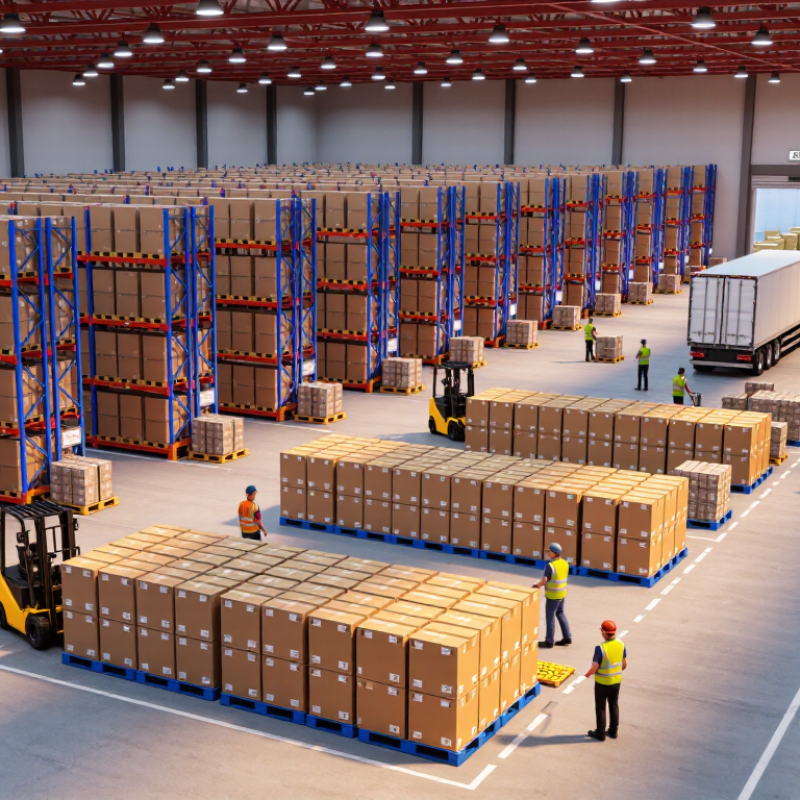
Bulk boxes are large, corrugated containers built to consolidate smaller products during international transport. They reduce loose cartons, simplify pallet loading, and create steadier footprints inside containers. This matters because UNCTAD’s Review of Maritime Transport reports that over 80% of global merchandise trade moves by sea. A damaged box can therefore face long handling chains, humidity, vibration, and repeated transfers.
Strong bulk packaging starts with the product, not the box. Select board strength according to weight, stacking height, travel distance, and moisture exposure. Edge Crush Test ratings help estimate stacking performance, while standard pallet dimensions can reduce unused space. The World Bank’s Logistics Performance Index 2023 highlights reliability and shipment timeliness as major logistics factors. Better box consistency supports both. Still, larger is not always better. An oversized carton may increase movement, void fill, and damage risk.
Tips: Test filled boxes before scaling orders. Use internal dividers for fragile units. Add clear handling marks. Record compression failures.
The Fibre Box Association reports that recovered fiber remains a major source for corrugated production in North America. That supports material efficiency, but recycled content alone does not guarantee reliable performance. Humidity can weaken board quickly. I have seen packaging plans fail when laboratory results replaced real route testing. A short sea trial, with corner protection and moisture checks, often reveals more than a perfect specification sheet.
Why Buy Bulk Boxes for Global Shipping? - What Bulk Boxes Are and How They Support Global Shipping
Bulk boxes are large shipping containers designed to consolidate products, reduce handling, and improve the use of storage and transport space. The figures below are typical industry ranges; actual capacity depends on the box design, material, product density, stacking method, and transport regulations.
| Bulk Box Type | Typical External Size | Approximate Volume | Typical Load Range | Common Applications | Global Shipping Benefit |
|---|---|---|---|---|---|
| Heavy-duty corrugated bulk box | 1,000 × 1,200 × 800–1,200 mm | About 1.0–1.7 m³ (35–60 ft³) |
Approximately 300–1,000 kg | Agricultural produce, packaged food, industrial parts, and retail replenishment goods | Lightweight construction can reduce packaging tare weight and support efficient palletized handling. |
| Double-wall or triple-wall corrugated box | 1,000 × 1,200 × 900–1,200 mm | About 1.1–1.7 m³ (39–60 ft³) |
Approximately 500–1,500 kg | Dense components, machinery parts, bulk materials, and export shipments requiring additional rigidity | Higher stacking strength helps protect cargo during port storage, truck transport, and container movement. |
| Reusable plastic pallet box | 1,200 × 800 × 760–1,200 mm | About 0.7–1.2 m³ (25–42 ft³) |
Approximately 300–1,000 kg | Automotive parts, chilled-chain handling, reusable distribution systems, and moisture-sensitive goods | Washable surfaces and consistent dimensions support repeated international handling and reverse logistics. |
| Wooden bulk crate | Custom-built; commonly 1,000–2,400 mm per side | About 1.0–10.0 m³ (35–353 ft³) |
Approximately 500–3,000 kg | Heavy machinery, oversized components, fragile equipment, and project cargo | Custom dimensions and bracing can protect irregular or heavy cargo during long-distance multimodal transport. |
| Collapsible bulk box | Typically 1,000–1,200 mm footprint; 300–1,200 mm operating height | About 0.3–1.7 m³ when assembled | Approximately 200–1,000 kg | Returnable components, seasonal products, and distribution networks with backhaul capacity | Folding empty boxes can reduce return-trip volume and improve warehouse and container utilization. |
| Ventilated bulk box | Commonly 1,000 × 1,200 × 800–1,200 mm | About 1.0–1.7 m³ (35–60 ft³) |
Approximately 250–800 kg | Fresh produce, flowers, and other goods requiring airflow | Controlled airflow can help manage heat and moisture accumulation during extended transit. |
Key Data for International Bulk-Box Planning
| Planning Dimension | Typical Data or Conversion | Why It Matters for Global Shipping |
|---|---|---|
| Volume conversion | 1 cubic metre = approximately 35.3 cubic feet | Helps shippers compare regional freight quotations and calculate container utilization. |
| Common pallet footprints | 1,200 × 1,000 mm and 1,200 × 800 mm are widely used formats | Matching the box footprint to the receiving network can reduce overhang, damage risk, and unused floor area. |
| Stacking design | Use the manufacturer's tested stacking load; do not rely on volume alone | Vertical compression can increase during storage and sea transport, so tested performance is essential. |
| Container compatibility | Standard dry containers are commonly available in 20-foot and 40-foot lengths | Box height, footprint, and loading pattern should be checked against the carrier's actual internal dimensions. |
| Wood packaging compliance | Wood packaging used in international trade may need treatment and marking under ISPM 15 | Meeting import requirements can help prevent border delays, re-export orders, or disposal of non-compliant packaging. |
| Dangerous goods | Packaging must meet the applicable dangerous-goods regulations and certification requirements | A general bulk box is not automatically approved for hazardous materials; classification and testing are required. |
| Load distribution | Heavy products should be centered and secured against movement | Balanced loading improves forklift handling, reduces tipping risk, and supports safer multimodal transport. |
Important: Capacity, dimensions, stacking strength, moisture resistance, and regulatory suitability must be confirmed against the specific bulk-box specification and the requirements of the origin, transit, and destination countries.
Related Posts
-
Top 10 Types of Bulk Boxes for Global Buyers?
-

Top Packing Boxes of 2025: Find the Best Options for Your Needs!
-
Essential Tips for Choosing the Best Moving Boxes?
-
Top 10 Tips for Finding Free Moving Boxes Near You?
-
Best Moving Boxes for Easy Packing and Shipping?
-
10 Cardboard Packaging Tips for Global Buyers