Why Are Packing Boxes for Moving So Important?
A move can turn an ordinary room into a maze of loose objects. Packing boxes for moving help keep belongings grouped, protected, and easier to track from one address to another. A labeled box of kitchen plates is simpler to handle than a stack of dishes wrapped in towels. The right box also limits shifting, which can reduce scratches and breakage during carrying or transport. Small details matter.
Choose boxes that feel dry, firm, and intact. Heavy items, such as books, belong in smaller boxes so they remain manageable. Lighter items, like bedding, can fill larger cartons without making them difficult to lift. Use cushioning around fragile objects, and fill empty spaces with clean packing paper or other suitable padding. A box that bulges or has a weak base may fail when lifted, even if it looks fine at first. Check the seams.
Good packing is not about buying the most boxes. It is about matching each container to its contents, closing it securely, and labeling it clearly on more than one side. These simple habits help movers place boxes in the right rooms and let you find essentials sooner. Still, not every item fits neatly into a carton. That is worth planning for. A little extra time spent choosing and packing boxes can make moving day safer, calmer, and less wasteful.
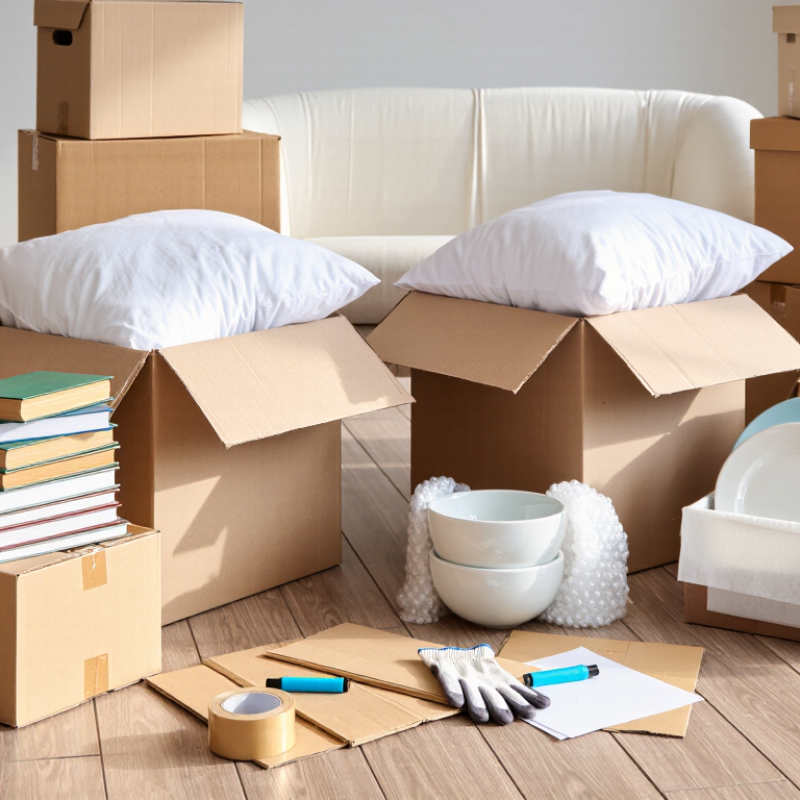
Packing boxes for moving are sturdy containers designed to hold household items during a move. Most are made from corrugated cardboard, with fluted layers that help resist everyday bumps and stacking pressure. They come in different sizes because books, towels, dishes, and lamps need different amounts of space and support. Small boxes suit dense items, such as books, while larger boxes work better for light, bulky belongings. That matters. A box filled with heavy objects can split at the bottom or become difficult to lift safely.
To use a box, choose one that fits the items without forcing them inside. Wrap fragile pieces, cushion empty gaps with paper or soft materials, and keep the weight manageable. Close the flaps securely with packing tape, then label the box with its contents and destination room. “Kitchen: mugs” is more useful than “miscellaneous.” Keep heavier objects near the bottom and avoid stacking boxes beyond what their sides can support. Not every box fits perfectly. Sometimes, repacking a half-filled box is safer than adding one last heavy item; it takes extra time, but it can prevent damage.

Packing boxes do more than hold belongings; they create a buffer against bumps, rubbing, and sudden shifts in a moving vehicle. A sturdy, correctly sized box keeps items from sliding into one another when a driver brakes or turns. The fit matters. Leave a little room for cushioning, but avoid large empty spaces that let objects gain momentum. Wrap glasses individually and fill gaps with clean paper or other padding. Plates usually travel more safely on edge, with padding between them, rather than stacked flat.
Box strength should match the load. Put books in smaller boxes so the bottom does not bow, and reserve larger ones for light items such as bedding. Heavy objects belong near the bottom, with lighter pieces above them. Tape the bottom seam securely; one strip may not hold a box of dense kitchenware. Keep boxes dry, since damp cardboard can soften and tear. Labels help movers handle fragile cartons carefully, but a label cannot replace solid packing. An old box may look fine and still split at a worn corner. Check its seams and handles before lifting. It is easy to overlook a loose flap when packing gets tiring.
Moving boxes are not all interchangeable. Their shape and strength affect how safely items travel and how easily they can be carried. Small boxes suit books, tools, and canned goods because dense loads stay manageable. A box packed with books should still be liftable without straining. Medium boxes work well for toys, shoes, and kitchen items. Use large boxes for light, bulky belongings such as bedding and cushions, not heavy stacks of cookware.
Dish or glassware boxes often include dividers that keep cups and plates from knocking together. Wrap each piece, fill empty spaces, and place heavier items near the bottom. Wardrobe boxes have a hanging bar, so coats and dresses can travel upright with fewer creases. They take up more truck space, though. Mattress and mirror cartons protect broad surfaces from scuffs, but choose a size that fits closely rather than leaving the item loose. Fit matters.
Use sturdy cartons for fragile or awkward objects, and check for crushed corners or damp spots before packing. Specialty boxes can help, but they do not replace careful padding. Label each box with its room and a brief contents note, such as “kitchen—mugs.” Keep heavier cartons small enough to carry safely. A common mistake is choosing a large box because it seems efficient; once filled, it may be difficult to move without dropping or twisting.
Choosing the right moving box starts with weight, not volume. Books are heavy. Pack them in small cartons so the base stays firm and lifting remains manageable. Use medium boxes for dishes and pantry goods, with paper cushioning around fragile items. Large cartons suit pillows, bedding, and light plastic goods. A box that looks roomy can become awkward once filled, and empty space lets items shift during carrying.
Strength matters too. Check the box’s stated load rating and condition; damp, crushed, or reused cartons may not perform as expected. Edge Crush Test (ECT) ratings indicate resistance to stacking pressure, while burst strength measures resistance to puncture. For ordinary household loads, match the rating to the contents and avoid treating a number as a guarantee under every handling condition. The American Forest & Paper Association’s 2022 paper recycling report estimated that 68% of U.S. paper and paperboard was recycled, but a recyclable box still needs careful sizing to avoid damage and unnecessary replacement. Fill gaps with crumpled packing paper, then close the flaps without forcing them. I still find it easy to overpack a “medium” box; weighing it before sealing can catch that mistake.
Packing boxes matter because safe packing begins before the first lift. Choose sturdy boxes that close flat, and keep dense items, such as books, in smaller cartons. Fill empty spaces with paper so contents do not slide when the box tilts. NIOSH’s 1994 Applications Manual for the Revised NIOSH Lifting Equation sets 51 pounds as the recommended load limit under ideal lifting conditions. The recommended limit falls when lifting involves reaching, twisting, repetition, or a poor grip. A box that feels manageable near the floor may feel much heavier on a high shelf.
Label each box on two sides with its destination room and a short contents list. Mark fragile items clearly, but do not rely on labels alone; place breakables upright and cushion them on every side. Keep labels visible after stacking. When lifting, bring the box close to your body, bend at the hips and knees, and turn with your feet rather than twisting. Pause if the load blocks your view or strains your grip. I’m tempted to pack every gap, but a slightly lighter box is often easier to carry safely.
Tips: Put heavy items at the bottom, and keep each box small enough to lift comfortably. Test the weight before sealing it. Small boxes help. If a carton is awkward, split the contents or ask someone to share the lift.