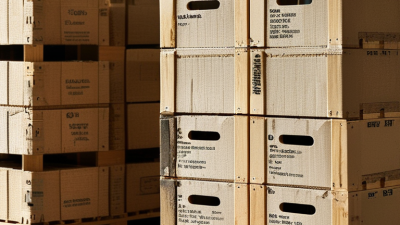
What Are Removal Boxes and How Do They Work?
Moving can feel chaotic, especially when loose books, glassware, and clothing crowd the hallway. Removal boxes offer a practical way to control that disorder. They are sturdy containers designed for packing, carrying, stacking, and temporary storage during a move. Their sizes often match specific needs, from small boxes for heavy books to larger cartons for lightweight bedding.
“Clutter is postponed decisions,” says professional organizer Andrew Mellen. That principle explains why removal boxes matter. Each box creates a clear decision about what belongs together, where it should go, and when it will be needed. A well-packed carton might contain labelled kitchen items, wrapped with paper, and sealed with strong tape. Its side should show the destination room, contents, and handling notes. Small details reduce searching later.
The box is only part of the system. Weight, moisture, lifting comfort, and stacking strength also affect performance. Double-wall cardboard can protect fragile belongings, but it may cost more and occupy extra space. Reusable plastic boxes offer consistency, although they require collection and cleaning. The best choice depends on the home, moving distance, budget, and available help.
Nothing works perfectly. Labels can fall off. A “miscellaneous” box can become a future mystery. Good planning still needs flexibility. This article explains how removal boxes are made, how they work, and how careful packing can make moving safer and less stressful.

Definition and Role of Removal Boxes in Household Relocation
Removal boxes are purpose-built cartons used to protect household goods during packing, lifting, transport, and storage. They usually have reinforced walls, predictable sizes, and writable surfaces for room labels. Unlike ordinary delivery cartons, removal boxes are selected for repeated handling and efficient stacking.
The U.S. Census Bureau recorded an annual residential mobility rate of about 8.4% in 2023. That movement creates a practical need for reliable packing systems. A removal box can hold books, kitchenware, clothing, or fragile ornaments when matched with the correct size. Small cartons reduce dangerous weight, while larger cartons suit soft, lightweight items. Poor sizing remains a common mistake. A large box filled with books may split before reaching the vehicle.
Professional packing also depends on load control. The International Safe Transit Association recommends testing packages against shocks, vibration, and compression during distribution. Household relocation is not identical to parcel delivery, but the same physical stresses appear. Boxes may be dragged across floors, stacked in a van, or exposed to damp air. Clear labels and sealed seams help reduce handling errors.
Environmental choices matter too. The U.S. Environmental Protection Agency reported 82.2 million tons of containers and packaging in municipal waste in 2018. Reusing sound removal boxes can reduce demand for new materials, although damaged cardboard should not be trusted. I have found that “reusable” does not always mean safe. Moisture, crushed corners, and weak tape can quietly undermine protection. A careful inspection is still necessary.
How Removal Boxes Work: Packing, Sealing, Stacking, and Load Distribution
Removal boxes are sturdy containers designed to protect household items during a move. Their performance depends on more than strong cardboard. Packing technique matters. I place heavier items at the bottom and lighter items above them. Books, tools, and small appliances need firm support. Clothing or towels can fill empty spaces and reduce movement. A box should feel full, but never strained.
Sealing requires equal care. I close every flap completely and apply durable packing tape across the main seam. Extra tape on the corners helps prevent opening during lifting. Labels should show the contents and handling direction clearly. However, labels do not replace careful handling. I once marked a box as fragile but packed it too loosely. The label helped less than expected.
Stacking affects both safety and load distribution. Larger boxes belong underneath smaller ones, creating a stable base. Uneven stacks can lean when the vehicle moves. Weight should spread across the floor rather than concentrate in one spot. Furniture, appliances, and dense boxes need balanced placement near the vehicle’s lower center. Keep pathways clear for lifting. That part is often overlooked. A load may look secure while hidden pressure damages a box underneath. Checking the stack after the first few miles is a practical habit, though it can feel unnecessary. The best method still needs adjustment for unusual shapes, weak packaging, or changing road conditions.
Safe Selection by Size, Weight, and ASTM D5118 Packaging Standards
What Are Removal Boxes and How Do They Work?
Safe Selection by Size, Weight, and ASTM D5118 Packaging Standards
Removal boxes are corrugated containers designed for moving household or workplace items. Their performance depends on more than appearance. Board grade, box dimensions, closure method, and internal cushioning all affect safety.
Measure the contents before choosing a box. Leave enough space for paper, foam, or folded fabric around fragile items. Do not fill large boxes with dense books or tools. A small, strong box is usually safer for heavy contents. Check the manufacturer’s stated weight limit and keep the total load below it. A box can look sturdy and still fail at its bottom.
ASTM D5118 describes practices for fabricating fiberboard shipping boxes. It helps guide material selection, construction, seams, and design consistency. However, the standard does not make every box suitable for every move. Test conditions, moisture, stacking pressure, and repeated handling can change performance. Use double-wall construction when contents are heavy or travel far. Place heavier objects at the bottom and keep the center of gravity low. Tape every bottom seam with reinforced packing tape.
I once underestimated the weight of packed kitchenware. The box held, but carrying it became unsafe. That mistake matters. Safe packing considers the person lifting the box, not only the cardboard. Inspect crushed corners, damp panels, and loose closures before reuse. If damage appears, repack the contents.
What Are Removal Boxes and How Do They Work? - Safe Selection by Size, Weight, and ASTM D5118 Packaging Standards
Removal boxes are corrugated-fiberboard cartons used to pack, protect, carry, and transport household or office items during a move. The figures below are practical selection guidelines; actual load capacity depends on board grade, flute profile, box construction, moisture exposure, closure method, and how evenly the contents are packed.
| Box Category |
Typical Internal Size
(L × W × H) |
Approximate Volume |
Suggested Maximum Packed Weight |
Suitable Contents |
Handling Guidance |
| Small book box |
305 × 305 × 305 mm
12 × 12 × 12 in |
About 28 L |
Up to 15 kg
33 lb |
Books, records, tools, canned goods, and other dense items |
Use for heavy contents because the compact size limits lifting strain. |
| Medium general-purpose box |
457 × 305 × 305 mm
18 × 12 × 12 in |
About 43 L |
Up to 12 kg
26 lb |
Kitchenware, toys, shoes, small appliances, and folded clothing |
Distribute weight evenly and fill empty spaces to reduce shifting. |
| Large lightweight box |
610 × 457 × 457 mm
24 × 18 × 18 in |
About 127 L |
Up to 10 kg
22 lb |
Bedding, cushions, blankets, lampshades, and lightweight clothing |
Avoid dense or fragile heavy items that can deform the base or increase lifting risk. |
| Wardrobe-style box |
500 × 500 × 1000 mm
19.7 × 19.7 × 39.4 in |
About 250 L |
Up to 15 kg
33 lb |
Hanging garments and lightweight clothing |
Keep upright, secure the hanging rail, and do not use for dense items. |
| Picture or mirror carton |
Variable; commonly 900 × 100 × 700 mm
35.4 × 3.9 × 27.6 in |
About 63 L |
Up to 8 kg
17.6 lb |
Framed pictures, mirrors, artwork, and flat fragile panels |
Use corner protection, wrap each item, mark the carton as fragile, and keep it vertical. |
ASTM D5118 Selection and Packing Checklist
| Packaging Factor |
Practical Requirement |
Why It Matters |
| Box construction |
Select a corrugated-fiberboard box appropriate for the product weight, size, stacking conditions, and shipping environment. |
ASTM D5118 covers fabrication of fiberboard shipping boxes; it does not assign one universal weight limit to every box. |
| Load distribution |
Place dense items at the bottom, keep the center of gravity low, and distribute contents across the base. |
Balanced loading helps reduce tipping, panel bulging, and stress on the bottom closure. |
| Interior protection |
Use cushioning or partitions for fragile goods and fill voids so products cannot move freely. |
Void control reduces impact damage during handling and transport. |
| Closure |
Close all flaps fully and apply tape or another closure method suitable for the box weight and transport conditions. |
A secure closure helps maintain box integrity and prevents contents from escaping. |
| Moisture and stacking |
Keep corrugated boxes dry, avoid direct contact with wet floors, and do not exceed the box’s tested or stated stacking capability. |
Moisture can reduce fiberboard strength, while excessive stacking can cause compression failure. |
Note: ASTM D5118 is a fabrication practice for fiberboard shipping boxes, not a standalone certification of a box’s maximum load. For commercial or high-risk shipments, confirm the manufacturer’s box specification, board grade, edge-crush or compression performance, and applicable transport requirements.
Transport Testing and Reuse: ISTA 3A Performance and Recycling Criteria
Removal boxes are reusable containers designed to protect goods during collection, movement, and return. Their value depends on more than sturdy walls. A reliable box must survive repeated handling, vehicle vibration, stacking, and sudden drops. ISTA 3A provides a practical simulation for parcel delivery systems. It can include atmospheric conditioning, compression, random vibration, and impact testing. The sequence should reflect the box’s weight, dimensions, and distribution route.
Testing should continue beyond the laboratory. Inspect a returned box under ordinary warehouse lighting. Check crushed corners, loose closures, torn labels, moisture marks, and contamination. A box may pass one test yet fail after ten cycles. That weakness matters. Reuse decisions need documented limits, not optimistic guesses. Records should connect each inspection with a cycle count and damage type. In practice, the box is never perfect.
Recycling also needs design discipline. Avoid unnecessary mixed materials, permanent adhesives, and hard-to-separate inserts. The OECD reported 353 million tonnes of plastic waste globally in 2019, with only 9% recycled. The U.S. Environmental Protection Agency reported 82.2 million tons of containers and packaging waste in 2018. These figures support a simple principle: extend service life first, then recover materials cleanly. A damaged box should be sorted by material, emptied, and kept dry before recycling. Reuse is not automatically sustainable. It requires measured transport performance, realistic inspection rules, and a recycling pathway that workers can actually follow.
Packaging Material Recycling Rates After Transport Use
ISTA 3A evaluates how packaged products withstand common transport hazards such as vibration, compression, and shock. After a box is removed from service, separating materials by type improves the chance of recycling.
Recycling rates shown are U.S. 2018 estimates from the Environmental Protection Agency’s Facts and Figures report. Actual recovery depends on local collection systems, material condition, contamination, and package design.